

Custom packaging in the U.S. typically runs from inexpensive poly mailers at just cents per unit up to premium rigid boxes that can cost significantly more for most small-brand formats, though that range tells only part of the story. A printed mailer box at 500 units lands closer to $1.30–$3.80 per unit, a folding carton $1.20–$2.80, and a rigid luxury box $2.80–$5.50, according to small-run benchmarks which account for die and plate setup fees of $150–$1,500. At the premium end, rigid boxes with specialty finishes can reach $6–$25+ per unit, as market-facing guides note. Poly mailers sit at the low end, often just cents per unit at volume.
Five levers move that number more than anything else:
- Order quantity (MOQ): The single biggest driver. Setup fees get spread across every unit you print.
- Material type and grade: Corrugated flute, SBS folding carton stock, and flexible films each carry different base costs.
- Printing and finishing method: Digital vs. offset/rotogravure, plus foil, embossing, or soft-touch coatings.
- Tooling and setup charges: Die cuts, plates, and prepress fees that hit hardest on small runs.
- Freight (DIM weight): Dimensional weight surcharges from carriers can add more to your true per-unit cost than you expect.
Before you request a single quote, build a rough total cost of ownership (TCO) number, not just a per-unit sticker price. Brands that only use the supplier’s per-box line routinely undercount true packaging spend by 30–60%. For SMBs that need low minimums, express timelines, and transparent pricing, Impacked offers custom printed packaging starting at 500 units. See the promo section below for how to get a quote.
Key Takeaways
Custom packaging cost is determined by far more than the per-unit price on a supplier quote: tooling, freight, and finishing together routinely double the sticker price for small-run orders.
| Point | Details |
|---|---|
| Per-unit benchmarks | Printed mailer boxes run $1.30–$3.80 at 500 units; rigid boxes $2.80–$5.50. |
| True cost is 40–60% more | Unit price covers less than half of real packaging spend once freight, tooling, and labor are included. |
| Quantity is the dominant lever | Setup fees of $150–$1,500 amortize steeply between 500 and 2,500 units, driving the biggest per-unit savings. |
| Always request a TCO quote | Ask suppliers to itemize tooling, inbound freight, and sample fees separately so you can compare bids accurately. |
| Impacked for SMBs | Impacked offers itemized quotes, low MOQs from 500 units, and express production as fast as 2 weeks. |
Table of Contents
- What factors actually determine custom packaging cost?
- What does custom packaging cost by format?
- How does order quantity affect your per-unit price?
- What does a full packaging quote actually include?
- How can you lower your custom packaging spend?
- How do lead times and freight affect your total cost?
- Do sustainable materials cost more?
- A sample quote worked example
- What to include in your RFQ so quotes are comparable
- How to turn these numbers into a packaging budget
- Custom packaging that fits your budget and your brand
- Sources
What factors actually determine custom packaging cost?
The quoted per-unit price is the starting point, not the finish line. Understanding each driver lets you negotiate smarter and compare quotes on equal footing.
Order quantity and setup amortization
Quantity dominates per-unit cost more than any other variable. A $500 die charge spread across 500 units adds $1.00 per box. Spread across 5,000 units, that same charge adds $0.10. The math is simple, but its implications are significant: small runs always carry a structural cost penalty that has nothing to do with material quality.
Material type and grade
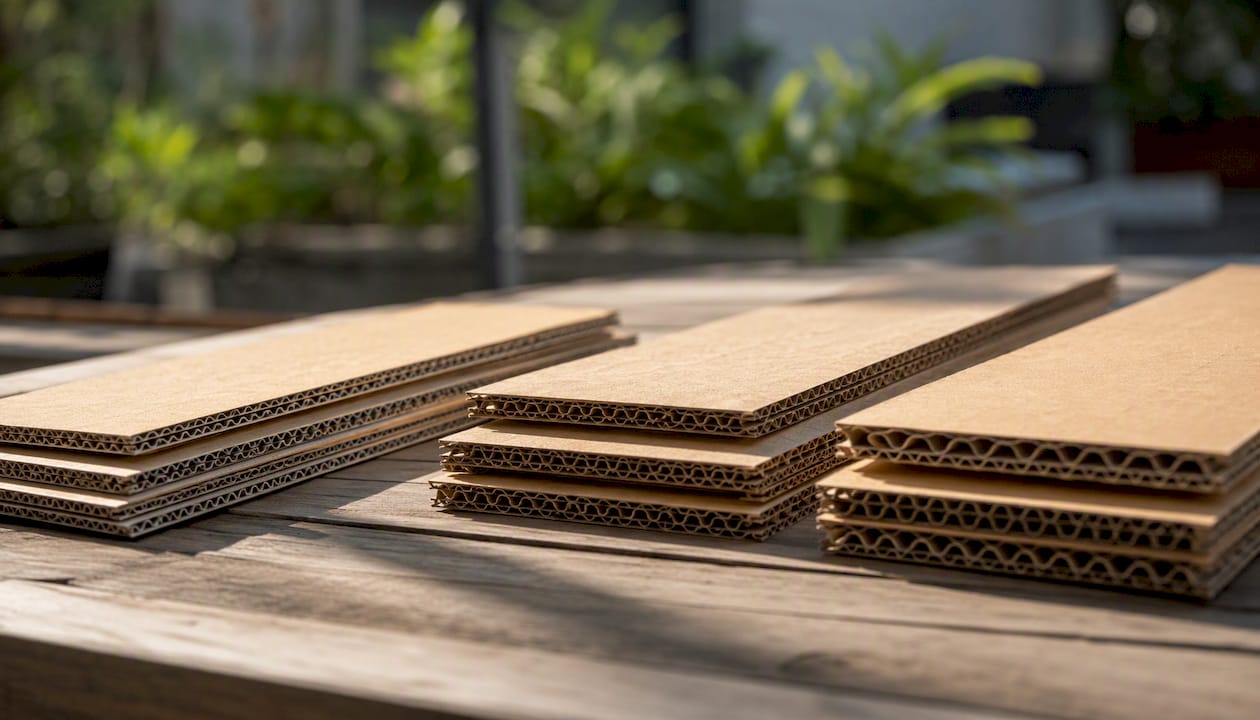
Corrugated board comes in several flute profiles (B, C, E, and F flute are most common for retail and shipping), and each carries a different cost and strength profile. SBS (solid bleached sulfate) is the standard for folding cartons and cosmetic boxes. Flexible films for pouches range from basic PE/PET laminates to high-barrier structures with foil layers. Specifying the correct edge crush test (ECT) rating for your corrugated box matters beyond cost: the right ECT reduces damage in transit and the downstream return costs that come with it.
Printing and finishing method
Digital printing suits short runs well because it carries no plate cost. Offset and rotogravure printing produce sharper results at scale but require plates or cylinders that add $300–$1,500 upfront. Finishes like soft-touch lamination, foil stamping, and embossing each add a per-unit premium and sometimes require additional tooling. The more colors and passes a job requires, the higher the conversion cost.
Structural complexity
A standard RSC (regular slotted container) costs far less to produce than a custom die-cut mailer with a magnetic closure and foam insert. Every bespoke structural element adds tooling time, assembly labor, and often a separate die charge. Multi-component boxes with trays, lids, and branded tissue add up quickly.
Hidden and ancillary costs
Many brands budget only for the box and discover the real bill at invoice time. Sampling, prepress, inbound freight, outbound DIM-weight surcharges, warehousing, and assembly labor are all real line items that belong in your packaging budget from day one.
A complete cost picture includes: sampling and prototyping fees, artwork and prepress charges, inbound freight from the supplier, outbound DIM-weight surcharges from your carrier, warehousing if you hold inventory, and assembly labor if inserts or kitting are involved. When you request quotes, ask suppliers to itemize tooling, freight, sample fees, and the ECT or board grade on every line.
Pro Tip: Ask every supplier to quote three quantities simultaneously (e.g., 500, 2,500, and 5,000 units). The price curve between those tiers reveals exactly where setup amortization kicks in and helps you decide whether a larger upfront order makes financial sense.
What does custom packaging cost by format?
Ranges below reflect U.S. market benchmarks for printed, branded packaging. All figures assume standard dimensions, 1–4 color printing, and no premium finishes unless noted. Per-unit cost falls as order size grows.
| Format | 500 units (est.) | 2,500 units (est.) | 5,000+ units (est.) |
|---|---|---|---|
| Plain corrugated shipping carton | $0.80–$1.00 | $0.50–$1.00 | $0.30–$0.50 |
| Printed corrugated/mailer box | moderate price range | lower mid-range cost at scale | can be quite affordable with large volumes |
| Folding carton (SBS) | $1.20–$2.80 | $0.70–$1.20 | $0.40–$0.90 |
| Rigid/luxury box | $2.80–$5.50 | $2.80–$3.80 | $1.20–$2.80 |
| Printed flexible pouch | lower mid-range pricing | more affordable at scale | cost lowers more with larger orders |
| Poly/padded mailer | lowest price range | inexpensive with moderate quantities | very low cost at highest volumes |
Sources: small-run benchmarks and market-facing pricing guides. Ranges are illustrative; your actual cost depends on dimensions, substrate spec, color count, finishes, and freight lane.
Premium finishes (foil, embossing, soft-touch lamination) typically add $0.20–$0.80 per unit on top of base ranges, and rigid boxes with full specialty treatment can exceed $25 per unit at low volumes, as format-by-format pricing analysis confirms. A 500-unit run of printed folding cartons for a food brand will land in a very different place than a 5,000-unit run of plain corrugated shippers, even if both are technically “custom packaging.”
How does order quantity affect your per-unit price?
Setup fees are the clearest example of why quantity matters so much. A $300 die charge on a 100-unit run adds $3.00 per box. On a 5,000-unit run, that same charge adds $0.06. The per-unit cost curve drops steeply between roughly 500 and 2,500 units, then flattens as you scale further.
Common MOQ thresholds by format
Different production processes carry different minimum order quantities:
- Digital printed mailer boxes and folding cartons: MOQs as low as 50–100 units are possible, though cost per unit is high. Most suppliers set practical minimums at 250–500 units for digital runs.
- Offset or flexo printed corrugated boxes: MOQs typically start at 500–1,000 units because plate setup costs need meaningful volume to amortize.
- Rotogravure printed flexible pouches: Cylinder engraving costs are significant, so MOQs often start at 500–1,000 units; some suppliers require 2,500+.
- Rigid/luxury boxes: Hand-assembly and tooling mean MOQs commonly start at 100–300 units, but per-unit cost stays high until 1,000+ units.
- Poly mailers: Low tooling cost means MOQs can start at 250–500 units with very low per-unit prices at scale.
Negotiating tooling reuse
Once a die or plate exists, reorders should not require you to pay for it again. Always ask: “Are tooling costs a one-time charge, and will my die/plates be stored for reorders?” Suppliers who store your tooling reduce your reorder cost materially. A should-cost model that breaks cost into material, conversion, tooling amortization, yield/waste, freight, overhead, and margin gives you a bottom-up baseline to compare against supplier quotes and identify where numbers diverge.
Pro Tip: For a first run, consider ordering a slightly larger quantity than your immediate need if cashflow allows. The per-unit savings between 500 and 2,500 units often exceed 30–40%, and stored inventory costs less than reprinting with new setup fees.
What does a full packaging quote actually include?
The sticker price on a supplier quote covers the box. Your real packaging budget covers everything it takes to get that box onto your product and out the door. TCO analyses consistently show that the quoted unit price represents only 40–60% of the real cost once freight, labor, damage, and storage are factored in.
Here is what a complete quote should itemize:
| Line Item | What It Covers | One-Time or Per-Unit? |
|---|---|---|
| Material/substrate | Board grade, film spec, or substrate weight | Per-unit |
| Printing | Ink, passes, color count | Per-unit |
| Plates/dies/tooling | Setup for printing plates or die cuts | One-time (amortized) |
| Prepress/artwork | File prep, dieline creation, color separation | One-time |
| Samples/prototypes | Pre-production samples for approval | One-time |
| Inserts | Tissue, foam, cards, dividers | Per-unit |
| Finishing | Lamination, foil, embossing | Per-unit |
| Inbound freight | Shipping from supplier to your warehouse | Amortized per-unit |
| Outbound freight (DIM) | Carrier surcharges based on box dimensions | Per-shipment |
| Warehousing | Storage if supplier or 3PL holds inventory | Per-unit/period |
| Assembly labor | Kitting, insert placement, closure | Per-unit |
Calculating true per-unit cost
Add all one-time costs, divide by run size, then add that figure to the per-unit material and printing cost. Then add amortized inbound freight and a DIM-weight estimate for outbound. That final number is your true per-unit packaging cost. Dimensional weight is often the biggest overlooked item for e-commerce brands: right-sizing your box to reduce DIM weight can lower outbound carrier charges more than any material substitution.
Common invoice traps
Watch for bundled freight (where inbound shipping is hidden inside the unit price), unspecified tooling reuse (where a supplier charges for a die you already own), and undisclosed surcharges for rush production, color matching, or minimum order shortfalls. A should-cost model built from the line items above gives you the leverage to ask pointed questions when a quote looks out of range.
How can you lower your custom packaging spend?
Reducing packaging cost does not mean reducing brand quality. The most effective tactics work at the design and procurement stage, before a single box is printed.
Design-to-cost tactics
- Right-size your packaging: A box that fits your product snugly reduces material use, DIM weight, and void fill. Measure your product carefully before finalizing dimensions.
- Simplify structural complexity: A standard RSC or tuck-end carton costs significantly less to produce than a bespoke die-cut structure. Reserve custom structures for hero SKUs.
- Reduce color count: Moving from 6-color to 4-color or 2-color printing cuts conversion cost, especially on offset runs.
- Eliminate unnecessary inserts: Tissue paper, foam, and branded cards add per-unit cost and assembly time. Keep only what genuinely serves the customer experience.
- Choose finishes strategically: Matte lamination reads premium at a lower cost than foil or embossing. Use high-cost finishes on one panel rather than all-over.
Order and supply-side tactics
- Batch larger runs when cashflow allows: The per-unit savings between 500 and 2,500 units are substantial. If your product has a long shelf life, a larger run often pays for itself quickly.
- Consolidate SKUs: Running two flavors in the same structural box with different print files is cheaper than two entirely different structures.
- Negotiate tooling reuse: Confirm in writing that your dies and plates are stored and available for reorders at no additional charge.
- Request itemized freight: Ask suppliers to separate inbound freight from unit price so you can compare quotes accurately and explore alternate freight lanes or LTL consolidation.
- Use digital printing for short runs: Digital printing eliminates plate costs entirely, making it the right choice for runs under 500–1,000 units or for testing new designs before committing to a larger offset run.
Pro Tip: Before finalizing your packaging design, ask your supplier for a dieline template and mock up the box physically with paper. A five-minute fold test often reveals structural issues or oversizing that would have cost you on every unit.
How do lead times and freight affect your total cost?
Production timelines and shipping mode are budget variables, not just logistics details. Rushing either one adds real cost.
Typical production lead times
| Production Method | Standard Lead Time | Expedited Lead Time | Expedited Premium |
|---|---|---|---|
| Digital printing (boxes/cartons) | 7–14 business days | 3–5 business days | Surcharges vary depending on circumstances. |
| Offset/flexo printing | 15–25 business days | 8–12 business days | 25–50% surcharge |
| Rotogravure (flexible pouches) | 20–35 business days | 10–15 business days | 30–50% surcharge |
| Rigid/luxury boxes | 25–40 business days | 15–20 business days | 30–60% surcharge |
Express production at 2 weeks is achievable for digital formats with a supplier like Impacked, but it carries a premium. Build that premium into your budget if you are launching a new product or responding to a seasonal spike.
Freight: inbound vs. outbound
Inbound freight (supplier to your warehouse) is often amortized into the unit price or quoted as a separate line. LTL (less-than-truckload) consolidation is common for mid-size runs; FCL (full container load) makes sense only at very high volumes. Air express is available for urgent shipments but can add $0.30–$1.00+ per unit depending on box dimensions and lane.
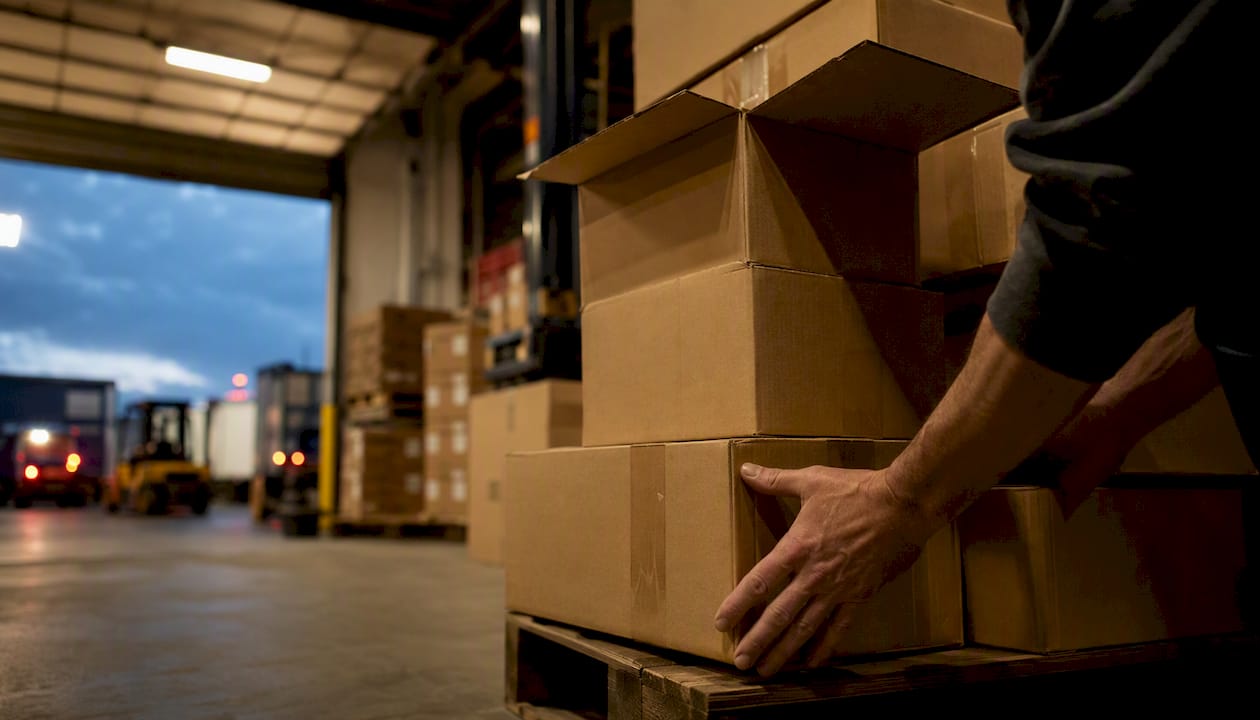
Outbound DIM-weight surcharges from carriers like UPS and FedEx are calculated on the greater of actual weight or dimensional weight (length × width × height ÷ 139 for domestic U.S. shipments). An oversized box that ships mostly air costs you on every order. Right-sizing packaging to minimize DIM weight is one of the highest-return cost optimizations available to e-commerce brands, as TCO research confirms.
Do sustainable materials cost more?
Sustainable packaging materials typically carry a modest upfront premium, though the gap between conventional and eco options has narrowed considerably as demand has grown.
- Recycled corrugated board (PCR content): Generally comparable in cost to virgin board for standard grades; some high-PCR-content specs add 5–15% to material cost.
- FSC-certified paperboard: The FSC chain-of-custody certification adds a small premium (often 3–8%) but is increasingly expected by retail buyers and eco-conscious consumers.
- Compostable flexible films: Typically 15–30% more expensive than standard PE/PET laminates, though pricing varies by supplier and volume.
- Recyclable mono-material films: Cost is converging with conventional laminates as production scales; some formats are now cost-neutral at volume.
Where sustainability can actually save money: lighter-weight substrates reduce DIM weight and outbound carrier charges. A thinner, certified board that meets your ECT requirement ships lighter than an over-specified conventional board, and the freight savings can offset part of the material premium.
When evaluating eco claims, ask suppliers specifically about FSC chain-of-custody documentation, compostability testing standards (ASTM D6400 or EN 13432), and post-consumer recycled content percentage. Vague “eco-friendly” language without certification documentation is not a reliable basis for a sustainability claim. For a deeper look at material trade-offs, eco-friendly packaging materials for food brands covers substrate options and certification differences in detail.
A sample quote worked example
The following is a realistic anonymous example for a small food brand ordering printed folding cartons. Use it as a template for your own budget spreadsheet.
Assumptions: 4" × 4" × 6" folding carton, SBS board, 4-color offset printing, matte lamination, no inserts, 1,000-unit run, domestic U.S. freight.
Adding a DIM-weight estimate for outbound shipping (assuming a carrier surcharge of $0.25 per unit based on box dimensions) brings the true per-unit packaging cost to approximately $2.71.
The sticker price of $1.40 per unit looks very different from the true per-unit cost of $2.71 once tooling, prepress, samples, and freight are included. This is exactly why comparing quotes on unit price alone leads to budget surprises at invoice time.
Where this example changes materially:
- Switching to soft-touch lamination adds roughly $0.15–$0.25 per unit.
- Doubling the order to 2,000 units reduces the amortized tooling and prepress to $0.30 per unit combined, dropping true per-unit cost to approximately $2.35.
- Adding a printed insert card adds $0.10–$0.20 per unit plus assembly labor.
What to include in your RFQ so quotes are comparable
A vague request gets a vague quote. Suppliers price what you specify, so the more precise your RFQ, the more comparable your bids will be.
RFQ spec checklist
- Finished dimensions (length × width × height, inside measurement)
- Substrate/spec: board grade (e.g., 350gsm SBS, 32 ECT B-flute corrugated) or film structure (e.g., PET/PE laminate, 120 micron)
- Printing method preference (digital or offset/flexo) and color count
- Finishes required (matte/gloss lamination, foil, embossing, spot UV)
- Dieline/tooling: new die required or existing dieline provided
- Inserts: type, material, and whether assembly is included
- Required certifications (FSC, compostable, food-safe)
- Sample request: number of pre-production samples needed
- Desired production lead time and ship date
- Requested quantities: quote at three tiers (e.g., 500, 2,500, and 5,000 units)
Questions to ask every supplier
- Are plates and dies stored after the first run, and are reorders charged tooling again?
- Is inbound freight included in the unit price or quoted separately?
- Who covers freight cost on pre-production samples?
- What is the typical yield/waste allowance, and how does it affect the final delivered quantity?
- What is the lead time for a reorder vs. a new order?
A short email template works well: list your spec checklist items as bullet points, state the three quantities you want priced, and ask suppliers to return an itemized quote with tooling, freight, and sample fees on separate lines. That format makes side-by-side comparison straightforward.
How to turn these numbers into a packaging budget
With benchmark ranges and a sample quote in hand, building a working packaging budget takes less time than most brands expect.
A simple budgeting workflow:
- Pick a target per-unit range based on your format and order size from the benchmarks above.
- Add a 10–15% contingency for hidden costs (sampling, prepress, DIM surcharges, minor design revisions).
- Build a TCO spreadsheet with columns for: unit price, tooling (amortized), prepress (amortized), samples, inbound freight (amortized), outbound DIM estimate, and assembly labor.
- Collect three comparable quotes using the RFQ checklist above.
- Order a sample run before committing to full production. Test pack-station assembly and measure actual DIM weight against your carrier’s rate card.
The TCO spreadsheet is the single most useful tool in your packaging budget process. Brands that compare only per-unit prices routinely miss the full picture, and the gap between sticker price and true cost is wide enough to affect margin materially.
Pro Tip: Run your finalized box dimensions through your carrier’s DIM-weight calculator before approving production. A box that is even 1–2 inches oversized in any dimension can push you into a higher DIM-weight tier and add meaningful cost to every outbound shipment.
Our perspective on where brands actually save money
The single highest-impact lever we see consistently is right-sizing combined with tooling reuse across a planned reorder cadence. Brands that design their packaging to fit their product precisely, then commit to a reorder schedule that keeps the same die and plates in service, achieve the steepest per-unit cost reductions over time. The first run is always the most expensive. The second and third runs, using stored tooling and a refined spec, are where the economics really improve.
From a practitioner standpoint, the most valuable thing to test in a sample run is pack-station assembly time and DIM weight, not print quality. Print quality is predictable from a supplier’s proof. Assembly time and dimensional weight are the variables that surprise brands most often at scale, and both are easy to measure with a physical sample before committing to production.
Impacked supports low MOQs starting at 500 units and express timelines as fast as 2 weeks, which makes it practical for small brands to test a design, validate the economics, and scale with confidence.
Custom packaging that fits your budget and your brand
Budgeting for custom packaging is straightforward when you have the right partner. Impacked works with food, beverage, pet food, and lifestyle brands to produce custom printed boxes, flexible packaging, and more, starting at just 500 units. That low minimum means you can test a design, validate your DIM weight, and confirm pack-station fit before scaling to a larger run.
Every quote from Impacked is itemized: unit price, tooling, inbound freight, and sample fees are all on separate lines so you can build a true TCO comparison from day one. Digital and rotogravure/offset printing options mean the right process for your volume, and sustainable material choices (recyclable, compostable, FSC-certified) are available without requiring a premium-only order. Express production as fast as 2 weeks keeps your launch timeline on track even when plans change. Get a quote and tell us your format, dimensions, and target quantity.
Sources
The resources below help you validate quotes, understand material specs, and build a more accurate packaging budget.
- Custom Packaging Cost Guide for Small Brands
- Packaging Cost Per Unit Calculator: Know Your True Packaging Spend | Margin Lab
- A Complete Guide to Packaging Prices & Cost Calculation | Lussopack
- How to Build a Should-Cost Model for Packaging: A Step-by-Step Procurement Template
Use any online packaging calculator as a starting point, but replace every default assumption with your actual product dimensions, freight lane, and order volume. A calculator built on generic inputs will produce a generic estimate, and generic estimates lead to budget surprises.