

For food, beverage, pet food, seafood, and lifestyle brands that need custom packaging boxes without committing to massive production runs, Impacked is the partner we recommend. With free digital proofs and express production available on short timelines and sustainable material options, Impacked gives growing brands the flexibility to move fast and look great on shelf.
- Low MOQ: Orders start at 500 units so you can test a design before scaling.
- Free digital proofs: Confirm exactly how your packaging will look before production begins.
- Express production: As fast as 2 weeks when your timeline is tight.
- Sustainable options: Recyclable, compostable, and FSC-certified materials available.
- Single point of contact: One person guides your project from concept to delivery.
Ready to get started? Request a quote or ask for a free digital proof directly through Impacked.
Table of Contents
- How do you choose the right custom packaging supplier?
- What packaging formats and materials work best for your product?
- What should you expect for price, lead time, and minimums?
- What happens after you request a quote?
- What do food, beverage, pet food, and seafood brands need to know?
- Key Takeaways
- Our perspective on what actually matters in custom packaging
- Ready to get your custom packaging right?
- Sources and further reading
How do you choose the right custom packaging supplier?
The right supplier clears a short list of non-negotiable criteria. Before you sign off on any order, run every candidate through this checklist.
Core selection criteria:
- MOQ: Can they work with your current volume? Look for options starting at 500 units.
- Lead time: Do they offer express production (2 weeks or less) alongside standard timelines?
- Printing methods: Do they offer both digital (short runs, fast proofs) and rotogravure or offset (high volume, color fidelity)?
- Material sustainability: Are recyclable, compostable, or FSC-certified materials on the menu?
- Food-safety experience: Have they supplied packaging for FDA-regulated food and beverage categories?
- Proofing process: Is a digital proof included, or does it cost extra?
- Point of contact: Will you work with one person, or get bounced between departments?
- Sample policy: Can you order a physical sample before committing to a full run?
- Total landed cost: Does the quote include freight, setup fees, and tooling?
Questions to ask any supplier before you order
| Question | What a strong answer looks like |
|---|---|
| What is your sample policy and cost? | Physical samples available; cost credited toward full order |
| Do you provide free digital proofs? | Yes, included before production |
| What is your standard and express lead time? | Standard several weeks; express production available on shorter timelines. |
| What food-safety certifications do you hold? | FDA-compliant materials; supplier certificate of compliance available |
| How many revision rounds are included? | At least 2 rounds before sign-off |
| What shipping options do you offer? | Domestic and international freight; tracking provided |
Red flags that should stop you cold
- Hidden setup or plate fees not disclosed in the initial quote
- No physical sample option before full production
- Digital proofs not included or charged separately
- Response times longer than 48 hours during the quoting stage
- No documented food-safety experience for your product category
What drives the price of custom boxes and packaging
- Artwork complexity and number of ink colors
- Material choice (kraft, coated board, barrier laminate, corrugated)
- Special finishes (spot UV, embossing, cold foil)
- Order quantity (per-unit cost drops significantly at scale)
- Express production fees
- Dieline creation and tooling for specialty box styles
- Freight and import duties for international shipping
What packaging formats and materials work best for your product?
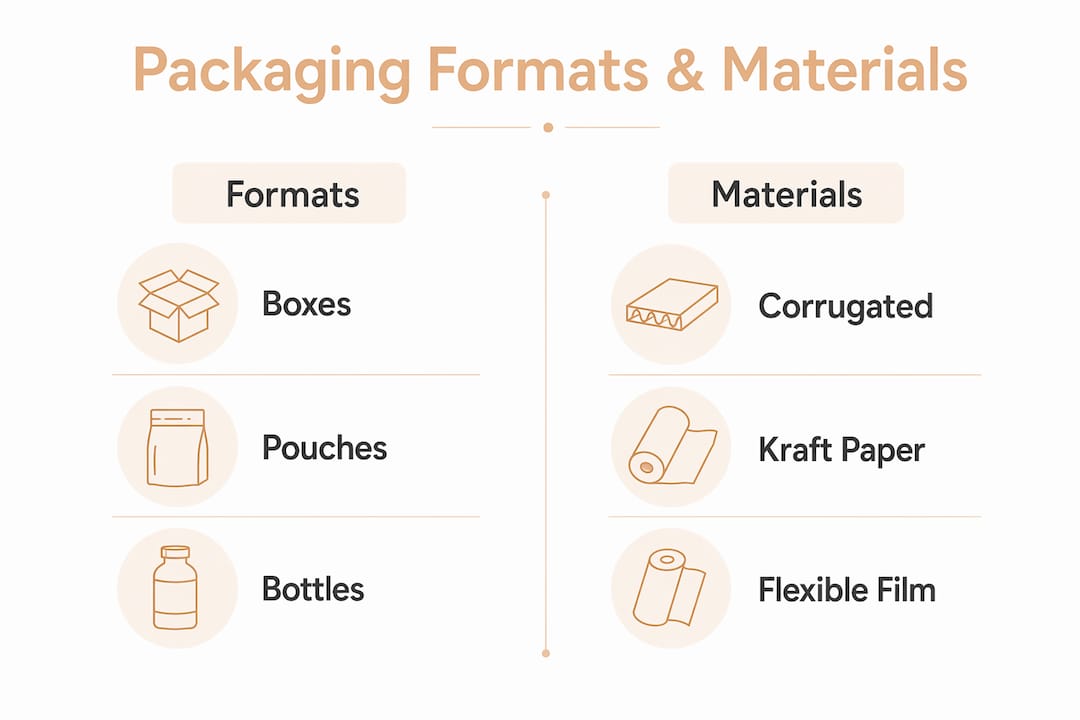
The format you choose determines shelf presence, product protection, and shipping cost. Here is how the main options map to common product categories.
Format by product type:
- Corrugated mailer boxes: Shipping-durable; ideal for DTC food kits, meal prep, and fragile lifestyle products.
- Folding cartons (tuck boxes): Retail-ready; common for tea, supplements, cosmetics, and gifting. Available with varied coatings for shelf display.
- Stand-up pouches: Lightweight, barrier-flexible; excellent for coffee, snacks, pet treats, and dry goods.
- Flexible packaging and roll film: High-volume, cost-efficient; suits frozen seafood, produce, and bulk dry goods.
- Packaging tubes: Distinctive shelf presence for premium lifestyle, beauty, and specialty food products.
- Cold cups: Branded single-use cups for beverage brands at retail or foodservice.
- Kraft vs. coated board: Kraft reads as natural and sustainable; coated board delivers sharper color reproduction for premium retail.
Digital vs. offset and rotogravure printing
Digital printing wins for short runs, fast turnaround, and variable data (different SKUs, seasonal designs). It is the right call when you are testing a new product or launching a limited edition.
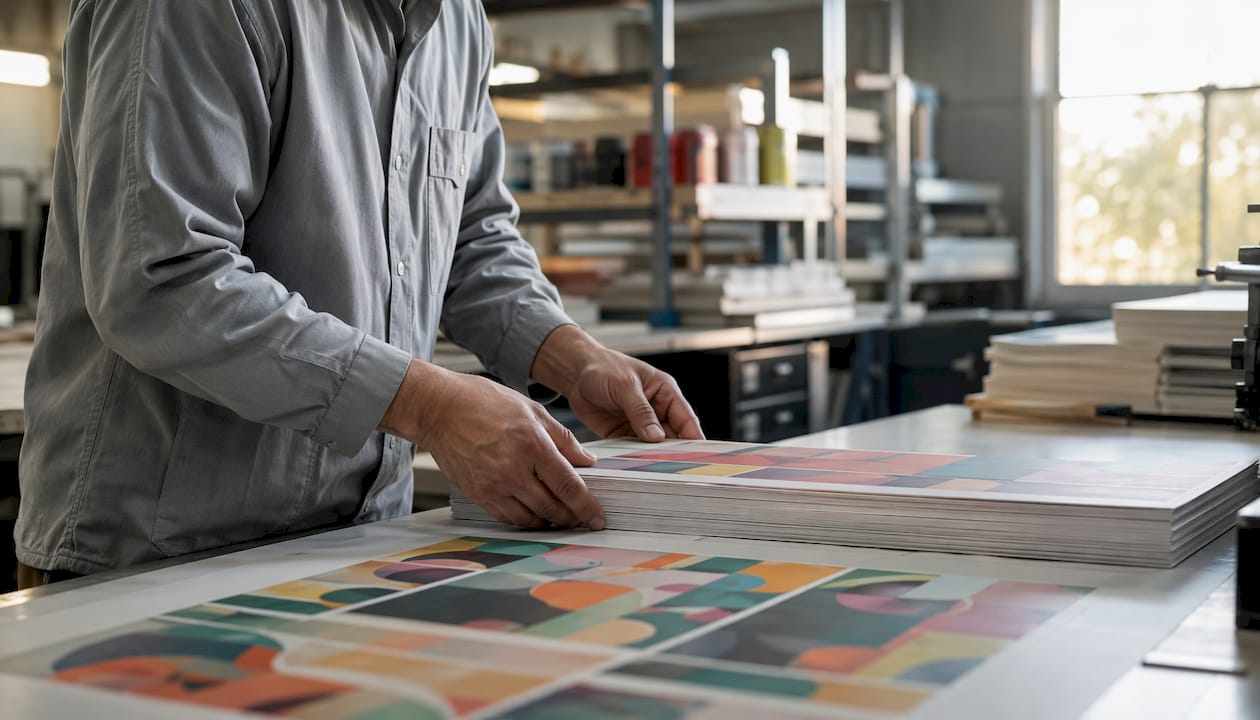
Rotogravure and offset printing deliver superior color fidelity and lower per-unit costs at high volume. If you are ordering tens of thousands of units with consistent branding, the economics shift decisively toward these methods.
Finishes and when to use them
- Matte laminate: Sophisticated, tactile feel; photographs well for social unboxing content.
- Gloss laminate: Bright, vivid colors; durable for retail handling.
- Spot UV: Selective high-gloss accent on logos or imagery; strong shelf impact.
- Emboss/deboss: Adds texture and perceived premium value; common on gift and lifestyle packaging.
- Cold foil: Metallic accents without the cost of hot stamping; effective for beverage and premium food.
Pro Tip: Choose a matte base with spot UV on your logo. The contrast photographs sharply for social media unboxing content, which drives repeat purchases and organic sharing.
Pro Tip: Right-sizing your boxes to fit your product closely reduces corrugated material use and cuts dimensional weight shipping charges, which adds up fast for DTC brands.
What should you expect for price, lead time, and minimums?
Low MOQs are available, and express production can run on short timelines. Both figures depend on format complexity and material choice, but they set a realistic floor for planning.
Typical production timeline
| Stage | Standard timeline | Express option |
|---|---|---|
| Sample production | 1–2 weeks | Not always available |
| Prepress and digital proofs | 3–5 business days | 1–2 business days |
| Full production run | 3–4 weeks | As fast as 2 weeks |
| Freight (domestic US) | 5 business days | Expedited available |
Cost drivers to budget for
- Quantity (the single biggest lever on per-unit cost)
- Material grade and barrier specification
- Number of ink colors and color matching requirements
- Special finishes (each adds cost and sometimes lead time)
- Dieline creation and tooling for custom die-cut styles
- Expedited production fees
- Freight mode and destination
How to use samples wisely
Order a physical sample before approving a full run. Sample charges are typically modest and often credited toward your production order. Use the sample to check print registration, color accuracy, structural integrity, and how the box performs under your actual shipping conditions. Catching a structural issue at the sample stage costs far less than a production rework.
What happens after you request a quote?
The end-to-end workflow is straightforward: quote → dieline and artwork → digital proof → sample → production → quality check → ship. Knowing what each step requires from you keeps the project on schedule.
- Request a quote (Day 1): Submit your SKU details, desired quantity, preferred materials, and any existing artwork. The more specific you are, the faster the estimate.
- Dieline and artwork setup (Days 2–5): Your supplier provides a dieline template scaled to your product dimensions. A dieline is the flat, unfolded blueprint of your box, showing fold lines, bleed areas, and safe zones. Accurate product measurements and packaging orientation are critical here.
- Digital proof review (Days 3–7): You receive a digital proof showing exactly how your artwork sits on the dieline. Review color references, text placement, and barcode positioning before approving.
- Sample production (1–2 weeks): A physical sample is produced for structural and print verification.
- Production run (3–4 weeks standard; as fast as 2 weeks express): Full manufacturing begins after your signed approval.
- Quality check and ship: Finished units are inspected before dispatch, with tracking provided.
Pro Tip: When approving a digital proof, use annotated comments to flag specific areas (e.g., “logo color too warm — reference Pantone 485 C”). Confirm color references in writing and request a signed proof document. This protects both sides if a color dispute arises after production.
What do food, beverage, pet food, and seafood brands need to know?
Packaging for regulated food categories carries requirements that go beyond aesthetics. The materials touching your product, the barrier performance, and the labeling compatibility all affect compliance and shelf life.
The most important constraints by category:
- Seafood: Moisture and temperature resistance are non-negotiable. Coated corrugated or wax-free liners prevent delamination in cold-chain environments. Impacked’s seafood packaging options address these barrier requirements directly.
- Coffee: Oxygen and light protection extend shelf life. Barrier pouches with a one-way degassing valve are the standard. See Impacked’s coffee packaging for material and valve options.
- Pet food: Heavy-duty seals and puncture-resistant laminates prevent bag failure under the weight and handling of bulk product. Impacked’s pet food packaging covers multiwall laminate specs.
- Beverage (cold cups): Food-contact approval and print durability under condensation are key. Impacked’s cold cups are designed for branded beverage service.
Industry compliance checklist
| Requirement | Why it matters | What to request from your supplier |
|---|---|---|
| Food-contact material certification | Ensures packaging materials are safe for direct food contact | Certificate of compliance; FDA reference guidance for food-contact materials |
| Barrier lamination specification | Protects product from oxygen, moisture, and light | Material spec sheet with barrier values (OTR, WVTR) |
| Temperature-controlled shipping capability | Maintains integrity for frozen or refrigerated products | Cold-chain shipping documentation |
| Labeling compatibility | Ensures labels adhere and remain legible through distribution | Substrate compatibility confirmation |
For food-contact materials, the FDA’s guidance on indirect food additives is the primary US reference. Always request a supplier certificate of compliance before production.
Key Takeaways
Choosing the right custom packaging partner comes down to five factors: low MOQ, free digital proofs, the right materials for your product category, realistic lead times, and a single point of contact who owns your project end to end.
| Point | Details |
|---|---|
| MOQ starts at 500 units | Low minimums let you test designs before committing to large production runs. |
| Free digital proofs matter | Always confirm print and layout before production to avoid costly rework. |
| Match materials to your product | Food, seafood, coffee, and pet food each require specific barrier and compliance specs. |
| Express production is available | Lead times as fast as 2 weeks are possible for time-sensitive launches. |
| Impacked covers all of this | Low MOQs, free proofs, sustainable materials, and a single contact from quote to delivery. |
Our perspective on what actually matters in custom packaging
Most brands spend too much time debating finishes and not enough time vetting the supplier’s food-safety experience and proofing process. A beautiful matte-with-spot-UV box means nothing if the barrier laminate fails for your seafood SKU or the proof approval process is so slow it blows your launch date.
The single-point-of-contact model is more valuable than it sounds. When one person owns your project from dieline to delivery, accountability is clear and communication gaps that cause production errors disappear. We have seen brands lose weeks to supplier handoffs between sales, prepress, and production teams, each of whom had a slightly different version of the artwork brief.
Sustainability is also moving from “nice to have” to a buyer expectation in food and beverage retail. Recyclable and compostable options are no longer premium add-ons. They are table stakes for brands that want placement in natural and specialty retail channels. Choosing FSC-certified materials or compostable laminates now protects your brand positioning as retailer requirements tighten.
Ready to get your custom packaging right?
Impacked delivers fully custom printed packaging, including custom printed boxes, stand-up pouches, flexible packaging, packaging tubes, and cold cups, with orders starting at 500 units. Free digital proofs are included, express production runs as fast as 2 weeks, and sustainable material options (recyclable, compostable, FSC-certified) are available across formats. One dedicated contact manages your project from the first quote to final delivery.
Before you reach out, have these ready: your SKU details, desired quantity, preferred materials or format, and any existing artwork files. That information lets us turn around an accurate quote fast.
Get a quote today, or browse category-specific solutions for coffee, pet food, and seafood to see material recommendations for your product type.
Sources and further reading
- Free digital proofs for packaging — How digital proofs work and why they matter before production
- The unboxing experience — Why packaging is a primary brand touchpoint for retention and social sharing
- Right-sized packaging and supply-chain efficiency — How optimizing box dimensions reduces material use and shipping cost
- Custom Printed Boxes — Impacked — Impacked’s box formats, finishing options, and proofing support
- Get a Quote — Impacked — Start a project and request an estimate
- Coffee Packaging — Impacked — Barrier pouches, degassing valves, and sustainable options for coffee brands
- Pet Food Packaging — Impacked — Laminate specs and sealing options for pet food
- Seafood Packaging — Impacked — Moisture and temperature-resistant solutions for seafood
- FDA guidance on food-contact materials — Primary US reference for food-contact compliance
- FSC certification — Verify fiber sourcing credentials for sustainable packaging materials
- Bell’s Protein Pantry — packaging and brand story — How a DTC food brand used packaging to shape its retail and unboxing strategy