

For most small-to-medium e-commerce and lifestyle brands, a US-based short-run digital printer with design support and transparent landed costs is a stronger fit than a one-size-fits-all online marketplace. Packlane built its reputation on low minimums and a self-serve design workflow, but many valid alternatives exist across distinct categories, each with different strengths on MOQ, sustainability, lead time, and total cost.
Here is a quick shortlist of the five alternative categories worth evaluating:
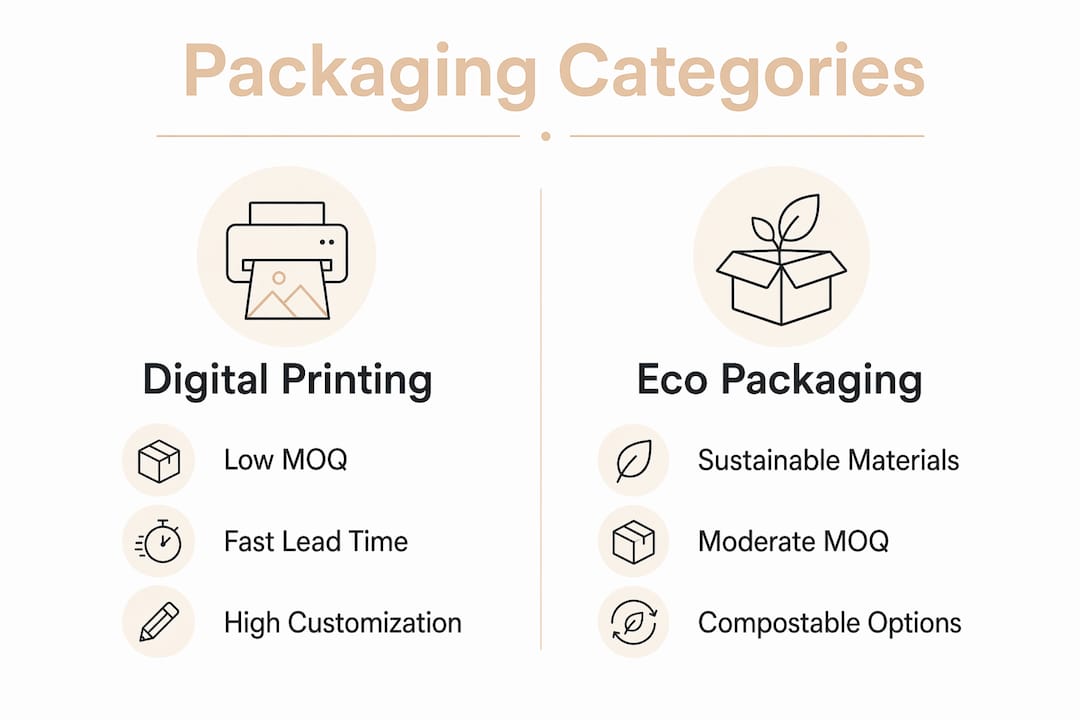
- US short-run digital box specialists: Fast turnarounds, low MOQs, and digital proofing built for pilot runs.
- Eco mailer and sustainable packaging specialists: Compostable and recyclable materials with certifications, ideal for brands with public sustainability commitments.
- Fulfillment-integrated platforms: Print-and-ship services that connect directly to Shopify or WooCommerce, reducing manual handling.
- Contract and offset partners for scaling: Best once you hit volumes above roughly 2,000 units per SKU and want lower per-unit costs.
- Full-service custom packaging providers: Agency-style support covering design, dielines, production, and quality control in one relationship.
Impacked fits squarely in the full-service custom packaging category, with MOQs starting at a moderate minimum, express production options, and a dedicated point of contact from concept to delivery. It is the right first call for food, beverage, coffee, pet food, and lifestyle brands that need low minimums, sustainable material options, and hands-on design support without managing multiple vendors.
When a Packlane-style marketplace is NOT the right fit:
- Your run exceeds 5,000 units per SKU and per-unit cost savings from offset printing outweigh the convenience of a digital marketplace.
- Your product requires specialized substrates (barrier films, compostable pouches, food-safe laminates) that most box-focused marketplaces do not stock.
- Your team needs in-house dieline development, structural engineering, or regulatory material compliance for food, beverage, or pet food categories.
Table of Contents
- How the main packaging categories compare at a glance
- Provider profiles: what each category actually delivers
- How to choose the right Packlane alternative
- What realistic pricing and MOQs look like for custom packaging
- Materials, finishes, and sustainability: what to compare across providers
- Why Impacked is a strong choice for food, beverage, and lifestyle brands
- User reviews and reputation signals across the alternatives
- Key Takeaways
- Packaging choices are a growth lever, not just a cost line
- Ready to get custom packaging quotes and samples?
- Useful sources and further reading
How the main packaging categories compare at a glance
The table below uses qualitative ratings to help you filter categories quickly. Specific quotes will vary by vendor and order volume.
| Category | MOQ | Lead time | Pricing transparency | Customization | Sustainability options | Sample policy | US availability | Integrations |
|---|---|---|---|---|---|---|---|---|
| Packlane-style online marketplaces | Low | Fast (5 days) | Transparent (instant quote) | Medium (templates, digital print) | Limited | Paid sample kits | US-based | Shopify, WooCommerce |
| US short-run digital box specialists | Low | Fast (5–15 days) | Transparent | Medium–High | Mixed | Paid samples | US-based | Varies |
| Eco mailer / sustainable specialists | Low–Medium | Typical (15 days) | Mixed | Medium | High (FSC, compostable) | Paid or free samples | US + overseas | Limited |
| Contract / offset partners (scale) | High (2,000+ units) | Slow (3–6 weeks) | Mixed (quote-based) | High (full custom) | Medium | Physical samples | Often overseas | Limited |
| Fulfillment-integrated platforms | Low–Medium (50–500 units) | Fast–Typical | Transparent | Low–Medium | Mixed | Limited | US-based | Shopify, fulfillment partners |
| Full-service custom packaging (Impacked) | Low (500 units) | Fast (from 2 weeks) | Transparent (quote-based) | High (pouches, boxes, tubes, roll film) | High (recyclable, compostable, FSC) | Yes | US + global | Quote-based |
Landed costs are the hidden variable. A quote that looks 20% cheaper than a competitor’s can flip once you add international freight, import duties, and repeat proof charges. Always request a fully landed cost before comparing headline per-unit prices.
Pro Tip: Before accepting any quote, ask the vendor to itemize freight, duties (if sourcing internationally), tooling or plate fees, and pre-production proof charges. These four line items are where most budget surprises originate.
Categories with built-in e-commerce integrations (Shopify, WooCommerce, fulfillment partners) tend to be the fulfillment-integrated platforms and the larger online marketplaces. Full-service providers like Impacked typically work on a quote-and-project basis, which gives you more flexibility on formats and materials but requires a brief onboarding conversation rather than a self-serve checkout.
Provider profiles: what each category actually delivers
The custom packaging market houses a broad range of specialty providers, from digital short-run printers to full-service agencies. Picking the right category often matters more than picking a specific brand name in early sourcing. Here is what each archetype looks like in practice.
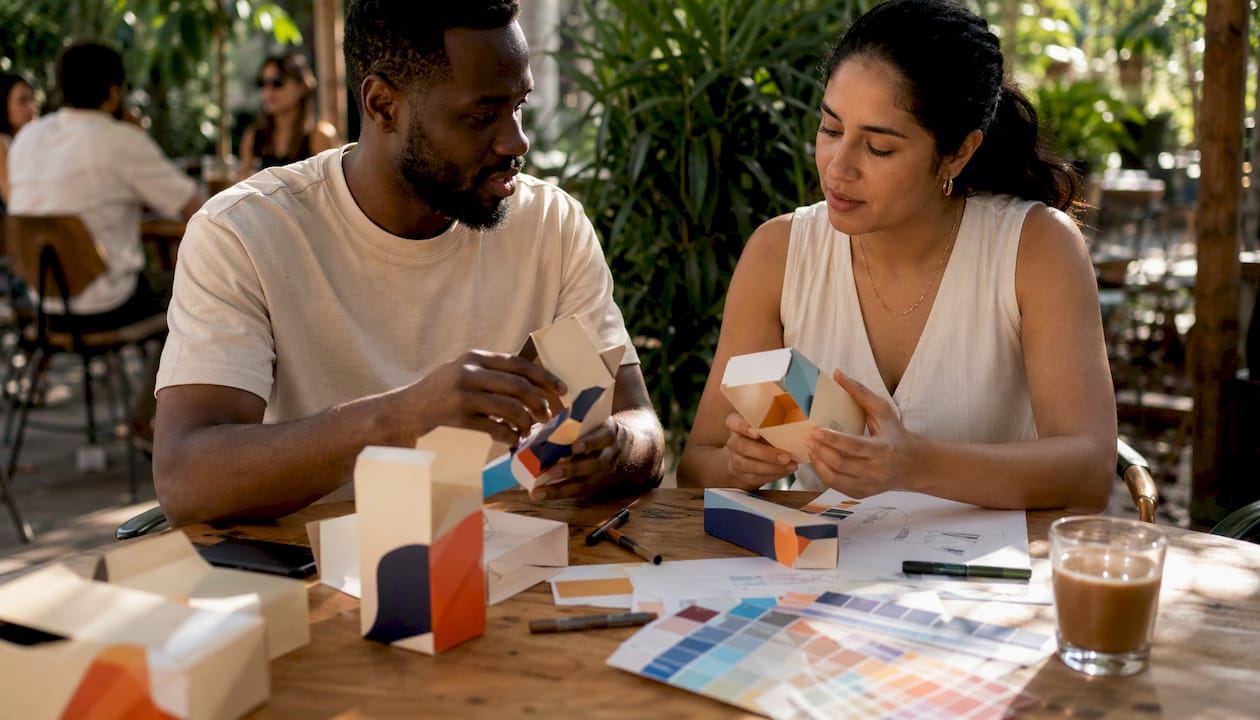
Packlane-style online design marketplaces
Best for: Brands that want instant online quotes, self-serve design tools, and very low minimums for mailers and boxes.
These platforms let you upload artwork, preview a 3D mockup, and check out without speaking to a sales rep. MOQs can be as low as very low quantities, and lead times often run a few business days. Print quality is solid for digital runs, though customization is typically limited to the platform’s supported box styles and sizes.
- Pros: Fast, transparent pricing; no sales process; good for one-off tests.
- Cons: Limited substrate options; no food-safe or barrier-film formats; sustainability options are often minimal; design support is self-serve only.
- Reputation check: Look for verified buyer reviews on third-party platforms and confirm whether the platform prints in-house or outsources production.
Short-run digital box specialists
Best for: Brands ordering low to moderate quantities of folding cartons, mailers, or rigid boxes for product launches or seasonal SKUs.
Short-run digital specialists commonly offer sample kits, digital proofing, and MOQs that favor small brands testing new SKUs. Turnarounds of 5–15 business days are typical. Print quality on digital presses has improved significantly, making these a practical choice for brands that rotate designs frequently.
- Pros: Low MOQs; fast iteration; digital proofing included.
- Cons: Per-unit cost is higher than offset at scale; substrate range is narrower than full-service providers.
- Reputation check: Confirm in-house versus outsourced printing and ask for a physical sample before committing to a full run.
Eco mailer and compostable packaging specialists
Best for: DTC brands with public sustainability goals that need certified compostable mailers, kraft boxes, or recycled-content packaging.
Sustainability and US availability remain high-priority filters for e-commerce brands in 2026. Eco specialists stock compostable films, recycled kraft, and FSC-certified board. MOQs typically start at a moderate minimum. Lead times run several days to weeks, and pricing is often higher per unit than conventional alternatives because of material costs.
- Pros: Verified certifications; strong brand story alignment; growing consumer demand.
- Cons: Higher per-unit cost; fewer print finish options; some materials have limited barrier properties for food products.
- Reputation check: Request the actual FSC or compostability certificate, not just a marketing claim. Ask whether certifications cover the finished product or only the raw material.
Contract and offset partners for higher volumes
Best for: Brands ordering large quantities per SKU that want the lowest possible per-unit cost and full structural customization.
Offset and flexographic printing delivers the sharpest color accuracy and lowest per-unit economics at scale, but setup costs (plates, tooling) make small runs expensive. Lead times of 3–6 weeks are standard, and most production happens overseas, adding freight and duty considerations.
- Pros: Lowest per-unit cost at volume; widest substrate and finish range; full structural engineering available.
- Cons: High MOQs; long lead times; complex landed-cost modeling; limited design support for smaller brands.
- Reputation check: Ask for production location transparency and a clear incoterms statement on every quote.
Fulfillment-integrated print-and-ship platforms
Best for: Brands that want packaging and fulfillment handled in one workflow, with direct Shopify or WooCommerce integration.
These platforms connect packaging production to order fulfillment, reducing the manual step of receiving inventory and shipping it to a 3PL. MOQs are typically low to moderate quantities. The trade-off is that customization is usually limited to the platform’s supported formats, and sustainability options vary widely.
- Pros: Reduced operational friction; automatic reorder triggers; good for subscription box brands.
- Cons: Less flexibility on materials and finishes; platform lock-in risk; sustainability options inconsistent.
- Reputation check: Verify integration reliability with your specific e-commerce stack before committing.
Label, sticker, and on-demand accessory providers
Best for: Brands that need custom labels, stickers, or tissue paper to complement existing packaging without a full box reorder.
On-demand label and sticker providers (Sticker Mule is a well-known example) offer very low MOQs, fast turnarounds, and transparent online pricing. These are useful for seasonal branding, limited editions, or adding a branded touch to plain packaging.
- Pros: Very low MOQs; fast; no design minimums.
- Cons: Not a replacement for structural packaging; limited to flat print applications.
Kitting and promotional packaging specialists
Best for: Brands building gift sets, subscription boxes, or influencer kits that need assembly, inserts, and custom tissue alongside the outer box.
Kitting specialists handle multi-component assembly, which saves brands the labor cost of doing it in-house. MOQs and pricing vary widely. Some work with fulfillment centers; others require you to ship components to their facility.
- Pros: Turnkey solution for complex unboxing experiences; insert and tissue options included.
- Cons: Higher coordination overhead; pricing is less transparent; lead times depend on component availability.
Impacked
Best for: Food, beverage, coffee, pet food, seafood, and lifestyle brands that need low-MOQ custom printed packaging with design support, sustainable material options, and a single point of contact.
Impacked produces custom printed boxes, stand-up pouches, flexible bags, packaging tubes, cartons, cold cups, and roll film. MOQs start at a moderate minimum. Express production runs are available from a couple of weeks. Sustainable options include recyclable films, compostable materials, and FSC-certified board. Every project gets a dedicated rep who manages dielines, design checks, sampling, and production sign-off.
- Pros: Low MOQ starting point; full-color digital and rotogravure printing; design and dieline support included; recyclable and compostable material options; global shipping with US availability.
- Consider: Not a self-serve marketplace; requires a quote conversation rather than an instant online checkout; best suited for B2B brand orders rather than one-off consumer purchases.
- Reputation check: Request a sample kit before committing to a full run. Impacked’s sample process is built into the project workflow, so you can evaluate print quality and material feel before production begins.
Pro Tip: For food, beverage, and pet food brands, always ask your packaging provider to confirm food-safe material certifications and barrier properties before ordering. A beautiful box that fails a food-safety check is an expensive mistake.
How to choose the right Packlane alternative
The single most important selection factor is total landed cost combined with sample policy and MOQ fit. A vendor with a lower headline price but no physical sample step, opaque freight charges, or a 2,000-unit minimum can cost you more in misprints, delays, and tied-up inventory than a slightly pricier full-service provider.
Questions to ask every vendor during a quote
- What is the all-in landed cost per unit, including freight, duties, and any tooling or plate fees?
- Do you provide a physical sample before production begins, and what is the sample turnaround time and cost?
- What is your dieline support process? Do you supply dielines, or does the brand need to provide them?
- Where is production located, and what incoterms apply to my order?
- What is your revision policy for digital proofs and physical samples?
- Are there hidden fees for repeat proofs, color matching, or custom sizes?
- What is the minimum order quantity for a custom size or structure outside your standard range?
Red flags to watch for
- Lead times stated as a range with no firm commitment (“typically 2–8 weeks”).
- No pre-production physical sample step offered.
- MOQ statements that are inconsistent between the website and the quote.
- Production location listed as “varies” or not disclosed at all.
- No written sample policy or proof approval process.
A quick five-step qualification workflow
- Request a sample kit and digital proof before committing to any production order.
- Confirm the fully landed cost including freight, duties, tooling, and proof charges.
- Place a small pilot order (at or near the vendor’s minimum) to validate print quality, lead time, and packaging fit.
- Confirm integration or fulfillment options if your workflow requires Shopify sync or 3PL handoff.
- Lock payment terms and production schedule in writing before approving production sign-off.
Pro Tip: A US-based supplier can meaningfully reduce hidden costs like import duties and long freight delays, and it speeds up iteration cycles when you need to adjust a design quickly. Factor transit time into your total cost model, not just the per-unit price.
What realistic pricing and MOQs look like for custom packaging
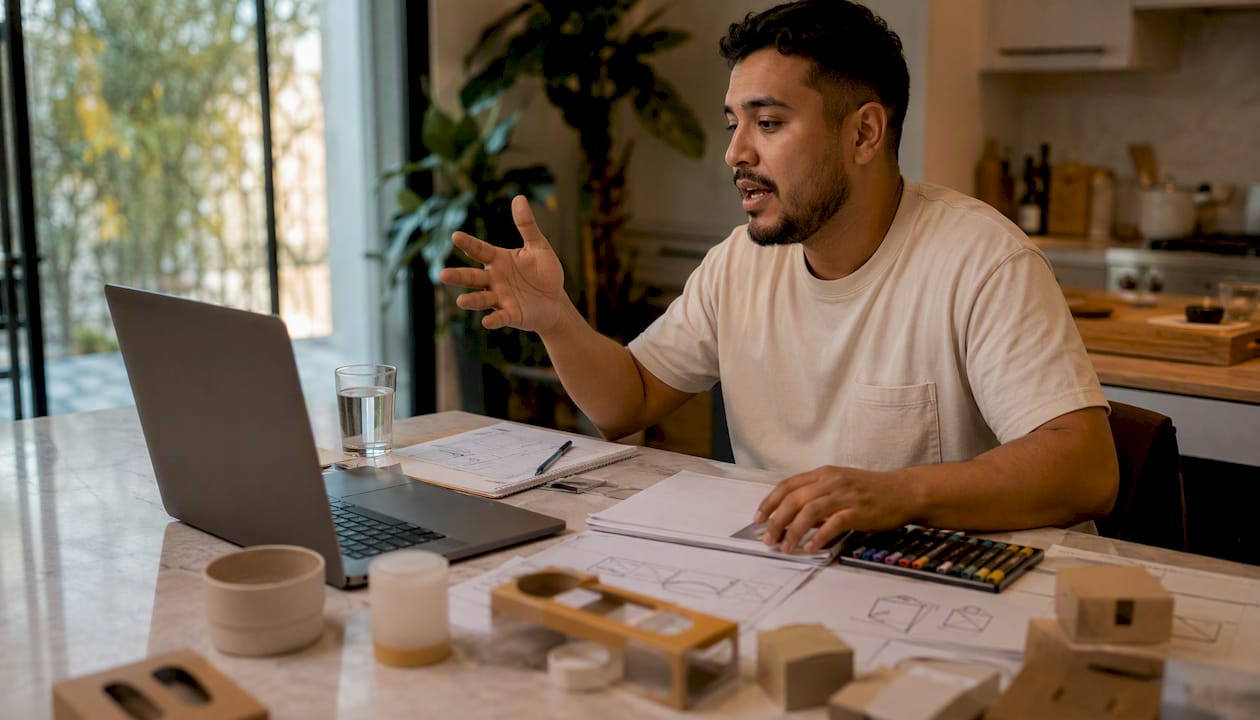
Per-unit cost declines materially as quantity increases. Sample and setup fees can dominate the economics of very small runs, so the first order is rarely the cheapest on a per-unit basis.
| Category | Typical MOQ range | Typical lead time | Estimated per-unit cost shape | Common hidden costs |
|---|---|---|---|---|
| Online marketplace (digital) | — | 5 business days | Higher per unit; no setup fee | Freight, expedited fees |
| Short-run digital specialist | — | 5–15 business days | Medium-high per unit | Freight, proof charges |
| Eco / sustainable specialist | — | — | Premium per unit | Certification surcharges, freight |
| Contract / offset (scale) | 2,000+ units | 3–6 weeks | Low per unit at volume | Plate/tooling fees, duties, freight |
| Fulfillment-integrated platform | 50–500 units | — | Medium per unit | Platform fees, fulfillment markup |
| Full-service provider (Impacked) | 500 units | From 2 weeks | Competitive; quote-based | None hidden; landed cost quoted upfront |
Sample to full-run timeline: Most brands should budget 2–4 weeks for the sample and approval phase before production begins. A typical ramp looks like: sample order (1–2 weeks) → review and approve → pilot run at minimum MOQ (2–4 weeks) → full production run. Rushing this process is the most common cause of costly reprints.
The four most common hidden costs to model before accepting a quote:
- Freight: Express air versus sea freight can swing landed cost by 30–50% on international orders.
- Import duties: Cross-border production adds customs duties that vary by material category and country of origin.
- Plate and tooling fees: Offset and flexo printing requires physical plates; these are a one-time cost but can be significant on first orders.
- Repeat proof charges: Some vendors charge for each revision to a digital or physical proof.
Materials, finishes, and sustainability: what to compare across providers
Corrugated board, folding carton (SBS), and flexible films are the three structural choices that most affect cost, print quality, and recyclability. Getting this decision right before you request quotes saves significant back-and-forth.
Common materials and finishes to evaluate:
- Kraft board (uncoated): Natural look, recyclable, lower print vibrancy; good for eco-positioned brands.
- SBS (solid bleached sulfate) folding carton: Bright white surface, excellent print quality, widely recyclable.
- Coated board: Higher gloss, sharper color reproduction; check recyclability in your target market.
- Aqueous and UV coatings: Aqueous is generally more recyclable; UV adds durability but can complicate recycling.
- Matte and soft-touch laminate: Premium tactile finish; most laminates are not curbside recyclable.
- Compostable films: Certified compostable pouches and mailers; confirm certification standard (ASTM D6400 for US industrial composting).
- Barrier films for food: Multilayer structures for oxygen, moisture, and light protection; critical for coffee, pet food, and seafood. Impacked’s flexible packaging options cover these barrier requirements.
- FSC-certified board: Chain-of-custody certification for responsibly sourced fiber; request the certificate number, not just the logo.
Pro Tip: Sustainability claims are easy to make and hard to verify. Before accepting a vendor’s eco credentials, ask for the actual certificate number for FSC or compostability claims, request third-party test reports for compostable films, and confirm that the certification covers the finished product, not just the raw material. For recyclable packaging guidance specific to the US market, check How2Recycle labeling requirements.
Trust-signal checklist for vendor sustainability claims:
- Certificate name and number (FSC, ASTM D6400, BPI-certified compostable).
- Manufacturing location and material chain-of-custody documentation.
- End-of-life guidance specific to the US market (curbside recyclable, store drop-off, industrial compost only).
- Third-party test reports for barrier or food-safe properties, where applicable.
Why Impacked is a strong choice for food, beverage, and lifestyle brands
Impacked is the right fit when your brand needs low-MOQ custom printed packaging with design support, sustainable material options, and a single point of contact who stays with your project from first brief to final delivery. That combination is particularly valuable for food, beverage, coffee, pet food, and lifestyle brands, where material compliance, barrier properties, and brand presentation all matter simultaneously.
Impacked proof points:
- Formats supported: Stand-up pouches, flexible bags, packaging tubes, boxes and cartons, cold cups, and roll film. Whether you need coffee packaging with barrier properties or pet food packaging with food-safe films, Impacked covers the format.
- MOQ: Starting at 500 units, which lets growing brands test a new design or SKU without committing to a large production run.
- Lead times: Express production available from 2 weeks, with standard timelines depending on format and order complexity.
- Print options: Full-color digital printing and rotogravure for high-volume runs with consistent color accuracy.
- Sustainability: Recyclable films, compostable materials, and FSC-certified board options available across formats.
- Design and dieline support: Impacked’s team provides dieline templates and design checks, so you are not navigating structural engineering alone.
Pros:
- Low MOQ starting point makes pilot runs financially accessible.
- One dedicated contact manages the entire project, reducing coordination overhead.
- Sustainable material options with real certifications, not just marketing language.
- Covers both flexible and rigid packaging formats in one relationship.
Consider:
- Not a self-serve marketplace; requires a quote conversation rather than an instant online checkout.
- Best suited for B2B brand orders; not designed for one-off consumer purchases.
For pilot runs, starting at the 500-unit minimum lets you validate print quality, material feel, and shelf presence before scaling. The recommended next step is to request a quote and samples directly, where you can specify your format, material preferences, and timeline.
Pro Tip: For food and beverage brands evaluating pouch samples, always request a physical sample with your actual artwork before approving production. Color on screen and color on a barrier film are not the same thing.
User reviews and reputation signals across the alternatives
Reputation research matters as much as spec sheets when you are choosing a packaging partner. Here is what to look for across the main provider types.
Packlane has a well-established reputation as a short-run branded packaging marketplace. Its Series A funding and US headquarters in Sherman Oaks signal stability, and user reviews consistently praise the self-serve design tool and fast turnaround for simple box formats. Common criticisms center on limited substrate options and the lack of design support for brands that need structural guidance.
Packhelp is a European-headquartered platform with US availability. Reviews highlight a broad product catalog and good online design tools. Brands sourcing for US fulfillment should verify landed costs carefully, as international production can add freight and duty complexity.
Arka positions itself as a sustainable packaging provider with a focus on e-commerce brands. User reviews note strong customer service and eco-friendly material options. MOQs are accessible for small brands.
PakFactory covers a wide range of box styles and finishes. Reviews point to strong customization options and responsive account management, though lead times for complex structures can run longer than digital-first platforms.
Packwire is known for its online 3D design tool and fast digital printing. Reviews are generally positive for simple mailer and box formats, with some notes on limitations for highly custom structural work.
Packola offers a self-serve online platform with competitive pricing for short runs. User feedback highlights ease of use and fast turnaround, with some limitations on finish options compared to full-service providers.
Lumi operates as a packaging sourcing platform that connects brands with a network of manufacturers. Reviews reflect the platform’s strength in sourcing complex or specialty packaging, though the model requires more brand-side project management than a direct provider relationship.
PackageWorks focuses on custom retail packaging with design support. Reviews note strong quality for folding cartons and retail-ready formats.
Refine Packaging covers a broad range of custom box types. User reviews highlight responsive customer service and competitive pricing for mid-volume orders.
Sticker Mule is the dominant player for on-demand labels, stickers, and custom tape. Reviews are consistently strong for print quality, turnaround, and transparent pricing. Not a structural packaging provider, but a reliable complement to any packaging program.
Fantastapack specializes in short-run digital printing for folding cartons and corrugated boxes. Reviews note strong print quality and accessible MOQs for small brands.
Impacked is built for food, beverage, and lifestyle brands that need more than a self-serve checkout. The full-service model means a dedicated rep, design and dieline support, and a structured sample approval process, which translates to fewer surprises at production. For brands in regulated categories (food, pet food, seafood), the material compliance support is a meaningful differentiator.
Across all providers, the reputation signals worth checking are:
- Verified buyer reviews on third-party platforms (not just the vendor’s own site).
- Transparency about production location (US in-house versus overseas outsourced).
- Sample kit availability and whether physical samples are part of the standard workflow.
- Responsiveness of customer support during the quote and sample phase, which predicts production-phase support quality.
Key Takeaways
For most small-to-medium e-commerce and lifestyle brands, the right Packlane alternative is a full-service or short-run digital provider with transparent landed costs, a physical sample step, and MOQs at or below a moderate quantity.
| Point | Details |
|---|---|
| Total landed cost is the real comparison metric | Always request freight, duties, tooling, and proof charges before comparing headline per-unit prices. |
| Sample policy predicts production quality | Vendors that include a physical sample step before production reduce the risk of costly misprints. |
| Category fit matters more than brand name | Choosing the right provider type (short-run digital, eco specialist, full-service) matters more than picking a specific platform. |
| Sustainability claims require documentation | Ask for FSC certificate numbers and compostability test reports; marketing language alone is not sufficient verification. |
| Impacked suits food, beverage, and lifestyle brands | With MOQs from 500 units, design support, and sustainable material options, Impacked is a strong fit for brands needing more than a self-serve marketplace. |
Packaging choices are a growth lever, not just a cost line
There is a tendency in early-stage brand building to treat packaging as a procurement problem: find the cheapest box that ships safely and move on. That framing costs brands more than they realize.
Packaging is often the first physical touchpoint a customer has with your brand. For lifestyle and food brands especially, the unboxing moment directly affects repeat purchase rates and social sharing. A pouch that feels premium, opens cleanly, and carries a clear sustainability story does real marketing work. A generic brown box does not.
The practical tradeoff is real: sustainable materials cost more per unit, and short-run digital printing costs more per unit than offset at scale. But the brands that run small pilot orders to test two or three packaging designs before committing to a large run consistently make better decisions. The cost of a 500-unit pilot is almost always lower than the cost of 5,000 units of packaging that underperforms on shelf or in an unboxing video.
The most underrated move in packaging sourcing is the A/B pilot. Order two designs at minimum MOQ, put them in front of real customers, and let the data decide before you scale. Most brands skip this step because it feels slow. It is actually the fastest path to packaging that works.
Ready to get custom packaging quotes and samples?
Custom packaging does not have to mean choosing between low minimums and high quality. Impacked gives food, beverage, coffee, pet food, and lifestyle brands a direct path to fully custom printed packaging, starting at 500 units, with express production from 2 weeks and sustainable material options built in.
Here is what to expect when you reach out:
- A dedicated rep contacts you to discuss your format, material needs, and timeline.
- Dieline and design checks are included, so you are not navigating structural specs alone.
- A physical sample is part of the standard workflow before production begins.
- Pilot runs start at 500 units, giving you a real-world quality check before scaling.
- Production timelines from 2 weeks for express orders, with standard timelines for complex formats.
Whether you need custom printed boxes for a retail launch or flexible pouches for a food or beverage brand, the process starts with a single conversation. Get a custom quote and samples and we will work closely with you to build packaging that makes an impact.
Useful sources and further reading
The sources below were used for market context, provider profiles, and factual claims throughout this article.
- Packlane alternatives roundup, Apex Workwear — Provider profiles, sample policy guidance, and short-run digital category context.
- 12 best companies for custom boxes and packaging, Growth Marketing Pro — Market breadth and alternative category justification.
- Packlane company profile, Tracxn — Packlane funding, headquarters, and competitive context.
- Packlane alternatives, SaaSHub — Market diversity and niche provider listings.
- Top Packlane alternatives, Commerce Caffeine — Sustainability and US availability as buyer priorities.
- Custom printed boxes, Impacked — Impacked’s box and carton formats and capabilities.
- Flexible packaging, Impacked — Pouch, barrier film, and roll film options for food and beverage brands.
- Recyclable packaging guide, Impacked — US-market guidance on recyclable film options and How2Recycle labeling.