

Pouch samples are physical packaging prototypes that let brand managers and product developers evaluate material quality, design, and functionality before committing to a full production run. In the food and beverage industry, these samples serve as the critical checkpoint between concept and shelf. Getting this step right prevents costly reprints, material failures, and consumer disappointment. The right sample pouches reveal exactly how your packaging performs under real conditions, from seal integrity to print color accuracy to how a customer actually opens the bag.
What types of pouch samples are available?
Pouch samples fall into several distinct categories, each suited to different product types and brand goals. Understanding the options before you request samples saves time and narrows your decision quickly.
The most common formats include:
- Stand-up pouches: Self-supporting with a gusseted base, ideal for snacks, coffee, and dry goods. They offer strong shelf presence and excellent print surface area.
- Flat pouches and sachets: Thin, single-use formats suited for powders, sauces, and condiment portions. The snap-to-open sachet format, such as the Synchpack design, allows one-handed dispensing and delivers 98% content release, minimizing waste.
- Spout pouches: Built for liquids and semi-liquids like juices, baby food, and sauces. The spout controls pour rate and supports resealability.
- Resealable pouches: Feature zip-lock or press-to-close closures for products consumers use over multiple sittings, including protein powders and trail mixes.
- Snap-to-open sachets: A newer format using a patented fold-and-snap mechanism for single-dose dispensing without scissors or tearing.
Material choice shapes performance as much as format does. Common options include polyethylene (PE), Mylar (BoPET), compostable films, and multi-layer laminates. Each material affects barrier properties, shelf life, heat resistance, and recyclability. A compostable film may suit a sustainability-focused brand but will behave differently under high-moisture conditions compared to a Mylar barrier pouch.
Sizes range from 0.02 oz single-serve sachets up to multi-kilogram bulk pouches. Specialty features like degassing valves (critical for fresh coffee), tear notches, and hang holes add functional value that only becomes apparent when you hold a physical sample.
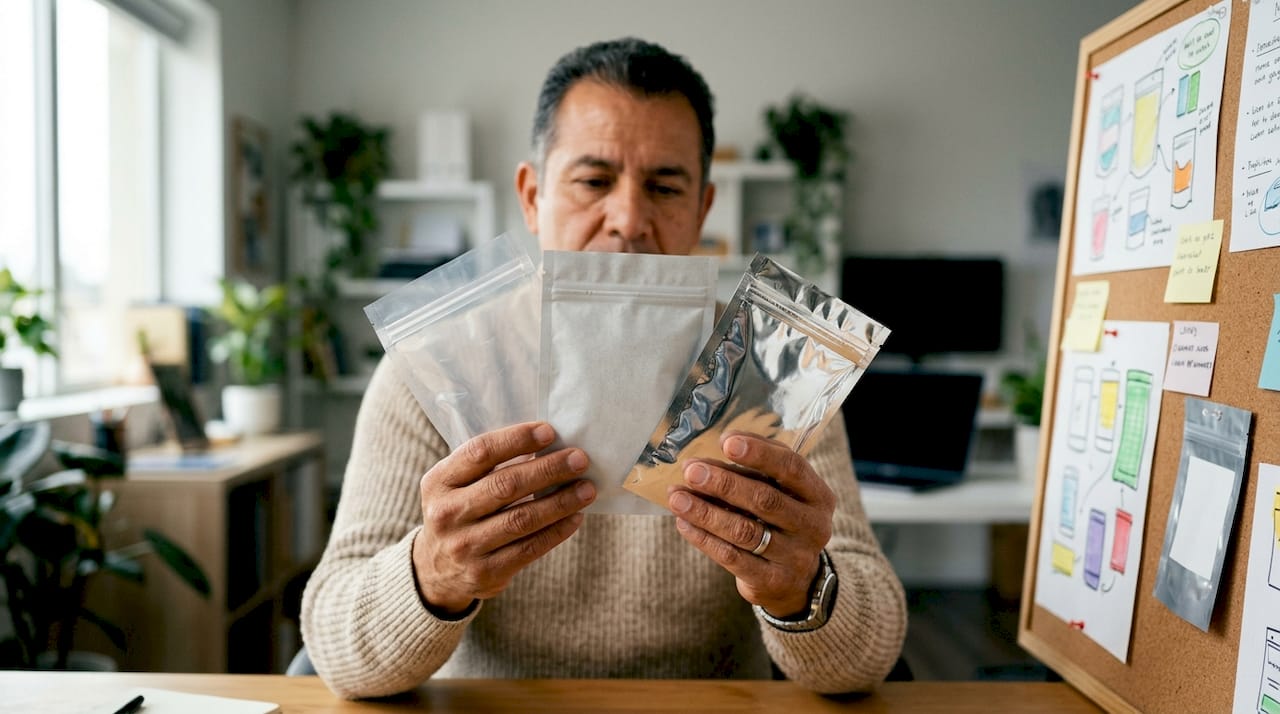
Pro Tip: Request samples across at least three format types. Holding a stand-up pouch, a flat sachet, and a spout pouch side by side reveals differences in shelf presence and user experience that no spec sheet can communicate.
| Pouch type | Best for | Key feature |
|---|---|---|
| Stand-up pouch | Snacks, coffee, dry goods | Strong shelf presence |
| Flat sachet | Powders, condiments | Compact, single-use |
| Spout pouch | Liquids, baby food | Controlled pour, resealable |
| Resealable pouch | Protein, trail mix | Multi-use closure |
| Snap-to-open sachet | Nutraceuticals, cosmetics | One-handed dispensing |
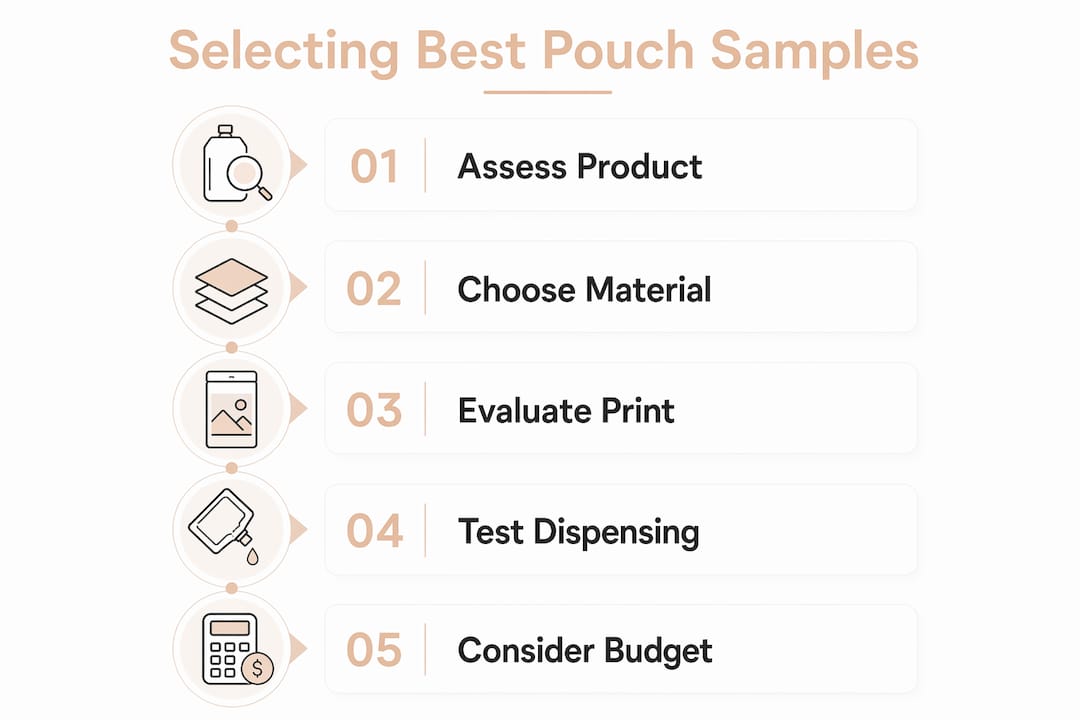
How to select the best pouch samples for your product
Selecting the right sample pouches starts with your product’s physical properties. Liquids, powders, pastes, and solid pieces each place different demands on packaging material and closure type.
Match material to product requirements
A high-fat product like nut butter needs a grease-resistant barrier layer. A fresh coffee blend needs a degassing valve to release CO2 without letting oxygen in. A powder supplement needs a moisture barrier that maintains potency through the product’s shelf life. Requesting samples in the correct material from the start prevents a second round of sampling after the first batch fails a basic compatibility test.
Evaluate branding and print capability
Custom printing on samples lets you see exactly how your graphics translate onto flexible film before the full run. Flexographic, digital, and offset printing each produce different color saturation and detail levels on pouch surfaces. Request printed samples, not blank ones, whenever your brand identity relies on precise color matching or fine-line artwork.
Assess dispensing and user experience
Dispensing technology is as important as visual branding in determining product success. A sauce pouch that drips, a coffee bag that tears unevenly, or a sachet that requires two hands to open all create negative consumer experiences. Test every opening and closing mechanism in the sample stage.
Factor in sustainability and budget
Compostable and recyclable materials carry higher unit costs at sample stage but reduce long-term environmental impact. Reusable pouch samples cost more upfront yet allow repeated testing across your team without reordering. Weigh the cost of additional sample rounds against the cost of discovering a material problem after production begins.
- Define your product’s physical state (liquid, powder, solid, paste).
- Identify the required barrier properties (moisture, oxygen, grease, UV).
- Choose two or three format types that fit your product and shelf context.
- Request printed samples to evaluate color accuracy and graphic detail.
- Specify any functional features needed (valve, spout, snap closure).
- Compare sustainability certifications across material options.
Pro Tip: Order samples in your actual fill weight. A pouch that looks proportional empty may feel awkward or unstable when filled to your target volume.
How to evaluate pouch samples before final production
Evaluation is where most brands underinvest. Holding a sample and approving it visually is not enough. A structured evaluation process catches problems that cost far more to fix after production.
Testing in realistic conditions reveals failures in seal integrity and dispensing mechanisms that lab-only testing misses. Simulate the full journey your product takes: filling, sealing, boxing, shipping, retail shelf display, and consumer handling.
Use this checklist to guide your evaluation:
- Seal integrity: Press and flex the sealed edges. A quality seal holds under moderate pressure without delaminating or leaking.
- Material durability: Bend, drop, and compress the sample. Look for pinholes, cracking, or delamination in the film layers.
- Print quality: Compare the sample print to your brand color standards under both natural and retail lighting. Check for color shift, banding, or registration errors.
- Dispensing performance: Open and reseal the pouch five times. For sachets, test the snap-to-open mechanism with one hand to confirm it performs as specified.
- Shelf simulation: Stand the pouch on a flat surface loaded to fill weight. Check stability, lean, and whether the base gusset holds its shape.
- Transport simulation: Pack filled samples into a shipping box and shake or drop the box. Inspect for seal failure or surface damage.
- Consumer feedback: Hand samples to five to ten people outside your team. Ask them to open, use, and reseal the pouch without instruction. Note where they struggle.
Collecting feedback from people unfamiliar with your product is the single most revealing step. Internal teams develop blind spots about packaging usability. An outside perspective catches friction points your team has stopped noticing.
Sample kits from Impacked include multiple styles, sizes, and finishes, giving your team a hands-on comparison across the full range of flexible packaging options before committing to a final spec.
What are the most common pouch sample mistakes?
Most packaging errors at the sample stage follow predictable patterns. Knowing them in advance lets you avoid the delays and reorder costs they create.
- Misjudging size and volume: Brands frequently request samples in a standard size rather than their actual fill volume. A pouch that looks right at 100g may be too tall or too wide for your retail shelf slot at 150g. Always specify your exact fill weight and desired finished dimensions.
- Skipping dispensing tests: Visual approval without functional testing is the most common and most expensive mistake. Portion control mechanisms like snap-to-open sachets dispense precise amounts and minimize residue, but only if the mechanism is tested and confirmed before production.
- Ignoring regulatory compliance: Food-contact materials must meet FDA or relevant international standards. Requesting samples without confirming material compliance can delay your launch if the chosen film fails a regulatory check.
- Approving blank samples: A blank white pouch tells you nothing about how your brand colors will look on the final product. Always request printed samples before approving a material or format.
- Underestimating print color shift: Colors on flexible film print differently than on paper or screen. Pantone references help, but only a physical printed sample confirms whether your brand red reads as expected under store lighting.
Pro Tip: Integrate your sample evaluation with a small consumer test panel. Even five structured interviews about packaging usability generate insights that change final design decisions and reduce post-launch complaints.
Key Takeaways
Pouch samples are the most cost-effective tool for catching packaging failures before production, and skipping a structured evaluation is the single most common cause of avoidable launch delays.
| Point | Details |
|---|---|
| Match format to product | Choose pouch type based on physical product state and required barrier properties. |
| Always request printed samples | Blank samples cannot confirm color accuracy or graphic detail on flexible film. |
| Test dispensing mechanisms | Functional testing of snap-to-open or spout closures prevents costly post-launch complaints. |
| Simulate real conditions | Test seal integrity, transport, and shelf display before approving any sample. |
| Include outside feedback | Consumer input during sampling catches usability issues internal teams overlook. |
What we have learned from years of pouch sample projects
The brands that get the most value from pouch samples are the ones that treat the process as a design tool, not a formality. We have worked with food and beverage teams who approved a sample after a five-minute visual check and then spent three months managing a recall because the seal failed under refrigeration. We have also worked with teams who ran two full rounds of consumer testing on their samples and launched with zero packaging complaints.
The difference is almost never budget. It is discipline. The brands that test dispensing mechanisms thoroughly, compare printed samples under actual retail lighting, and hand pouches to real consumers before signing off consistently outperform those that rush the step.
One insight we return to repeatedly: user interaction with packaging is as important as visual branding in determining whether a product succeeds on shelf. A beautiful pouch that is hard to open loses to a simpler pouch that works perfectly every time. The snap-to-open sachet format is a good example. Brands that test it properly discover that the one-handed dispensing experience becomes a genuine product differentiator, not just a packaging feature.
We also encourage brands to think about sustainability at the sample stage, not after. Requesting compostable or recyclable material samples early in the process gives your team time to evaluate real-world performance before sustainability becomes a last-minute specification change that delays production.
Start the sample process earlier than you think you need to. Two rounds of sampling with consumer feedback will always produce a better result than one rushed round approved by your internal team alone.
— Impacked
Impacked’s approach to custom pouch samples
At Impacked, we work closely with brand managers and product developers to make the sample process straightforward and productive. Our flexible packaging options cover stand-up pouches, flat sachets, spout pouches, and resealable formats, all available with custom printing from the first sample run.
We offer minimum order quantities starting at 500 units, which means you can test a real printed sample without committing to a large production run. Our team acts as a single point of contact from your first sample request through final delivery, covering material selection, print setup, and compliance review. Whether you are developing coffee packaging or a new snack format, we match the right materials and format to your product from day one. Request a quote and we will help you build a sample set that answers every question before production begins.
FAQ
What are pouch samples used for?
Pouch samples are physical prototypes used to evaluate packaging material, print quality, seal integrity, and dispensing performance before full production. They allow brand managers to confirm that a packaging format meets both functional and branding requirements.
How do I get custom pouch samples with my branding?
Request printed samples directly from your packaging supplier, specifying your Pantone colors, artwork files, and desired format. Impacked provides custom printed samples with flexographic and digital printing options starting at low minimum quantities.
Are reusable pouch samples worth the extra cost?
Reusable sample pouches cost more upfront but allow multiple team members and consumer testers to evaluate the same format repeatedly without reordering. For brands running extended testing programs, the cost is justified.
What should I test when evaluating a pouch sample?
Test seal integrity, material durability, print color accuracy, dispensing mechanism performance, and shelf stability under fill weight. Simulating transport and collecting feedback from outside testers rounds out a complete evaluation.
How many pouch sample types should I request?
Request at least two to three format types alongside your primary choice. Comparing a stand-up pouch, a flat sachet, and a spout pouch side by side reveals differences in usability and shelf presence that a single sample cannot show.