

Soft touch lamination is defined as a finishing process that bonds a thin, micro-textured film to a printed substrate, producing a matte, velvety surface that signals premium quality before a customer reads a single word. The film is typically polyester (PET) or polypropylene (BOPP), ranging from 12–30 microns thick, with a polyurethane or acrylic micro-textured coating that creates the characteristic soft feel. Brands in beauty, wellness, and luxury goods use this finish because it changes how a product feels in the hand, not just how it looks on a shelf. For marketers and packaging buyers, understanding what is soft touch lamination means understanding a tool that works on a sensory level most print finishes never reach.
What is soft touch lamination and how does it work?
Soft touch lamination works through a heat-and-pressure bonding process. A roll of pre-coated PET or BOPP film feeds through a laminator alongside the printed substrate. Heat activates the adhesive layer on the film, and pressure rollers press the two materials together into a single, unified sheet. The result is a surface that feels like high-thread-count fabric, which is not a coincidence. The higher coefficient of friction created by the micro-textured coating is what the brain interprets as quality and softness.
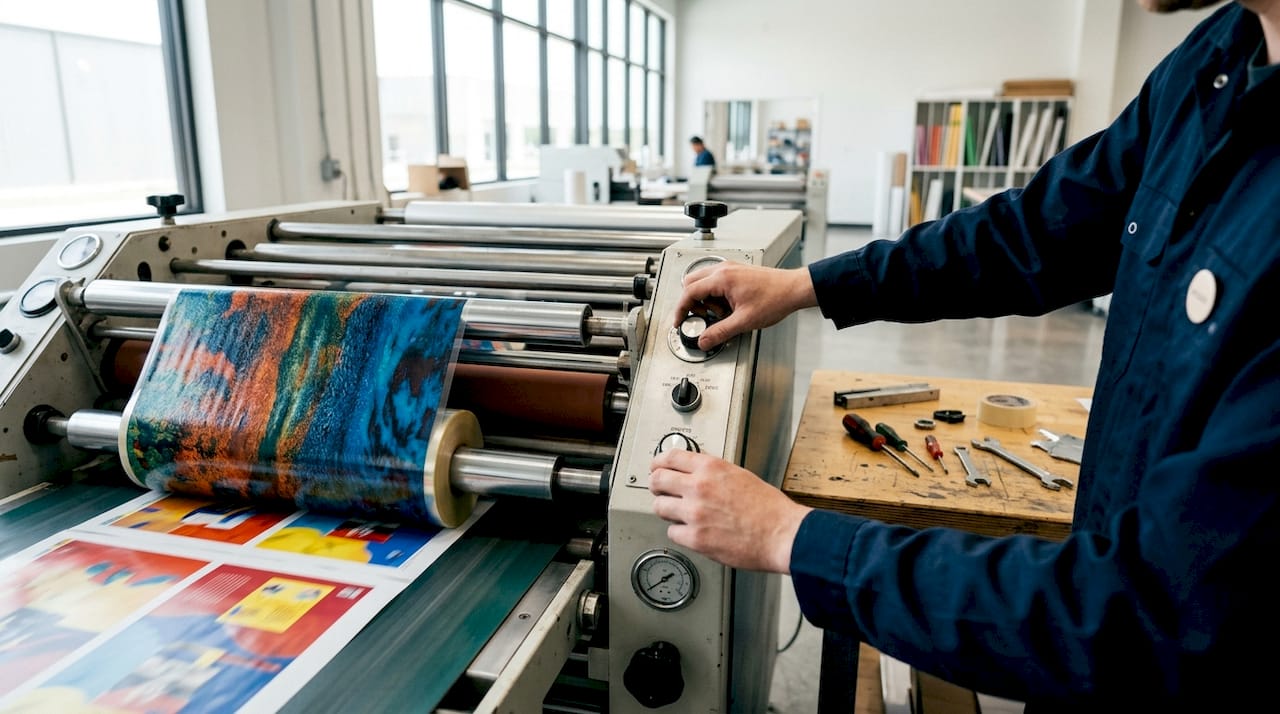
The film itself comes in several variants. Standard soft touch film delivers the classic velvety matte finish. Silk variants offer a slightly smoother feel with a subtle sheen. Touch variants push the texture further for an even more pronounced tactile effect. Each variant is compatible with offset, digital, and flexographic printing, though the substrate matters. Thicker cover stocks and rigid board materials bond cleanly. Lighter text-weight papers do not hold the film as well and are not recommended.
Film composition and coating chemistry
The micro-textured coating on soft touch film uses either polyurethane or acrylic compounds. Polyurethane coatings tend to produce a softer, more pronounced velvet feel. Acrylic coatings are slightly harder and more resistant to scuffing. Both coating types reduce surface glare significantly compared to uncoated or gloss-laminated prints.
- PET (polyester) film: Higher heat resistance, better dimensional stability, preferred for rigid packaging
- BOPP (biaxially oriented polypropylene) film: More flexible, lower cost, suitable for pouches and flexible formats
- Film thickness: 12–30 microns, with thinner gauges for flexible applications and thicker gauges for rigid board
- Coating type: Polyurethane for maximum softness; acrylic for added durability
Pro Tip: Temperature and pressure control during lamination are non-negotiable. Inconsistent heat or pressure causes bubbling, waviness, and delamination. Always run a test sheet before committing to a full production run.
What are the benefits and drawbacks of soft touch lamination?
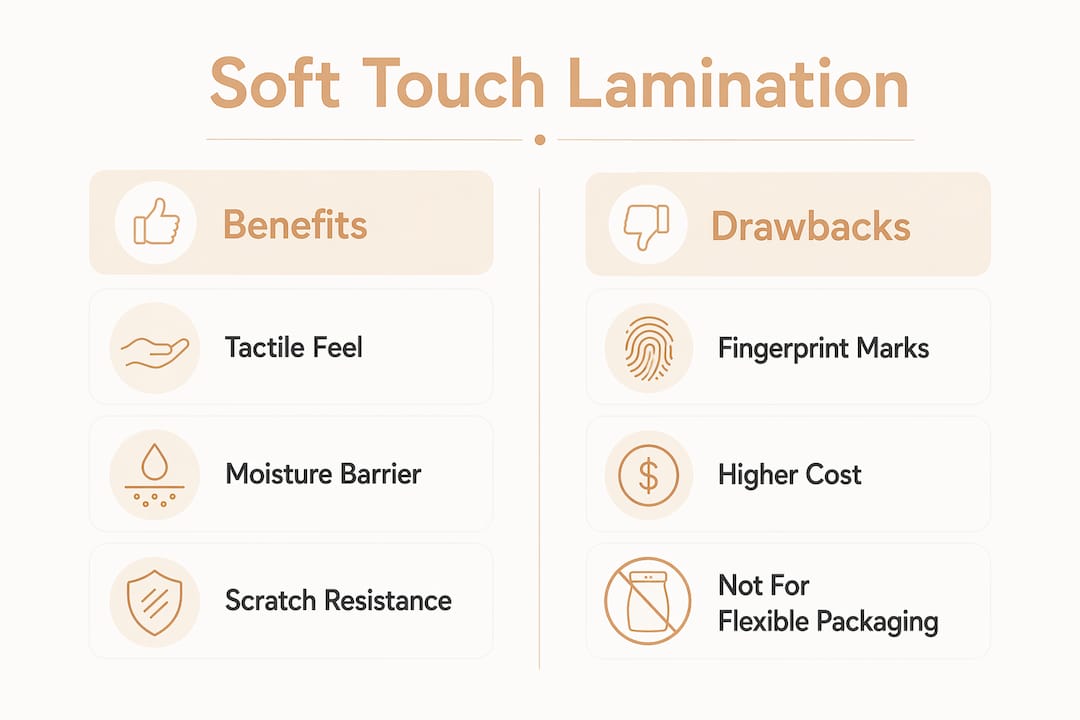
The most immediate soft touch lamination benefit is tactile. Customers who pick up a product with this finish hold it longer. That extra second of physical engagement translates directly into purchase consideration. The finish also reduces surface glare by 90% compared to non-laminated prints, which means colors appear richer and more saturated under retail lighting rather than washed out. Scratch resistance increases by 30–40% over unlaminated surfaces, which matters for products that sit on shelves or ship through distribution channels.
The protective qualities extend beyond aesthetics. Soft touch lamination creates a moisture barrier that protects the printed ink layer from humidity and handling. This is particularly valuable for food, beverage, and personal care packaging, where products move through cold storage or high-humidity environments. The finish also absorbs minor surface abrasions that would visibly damage a gloss-laminated box.
Drawbacks worth knowing before you commit
No finish is right for every application. Soft touch lamination has real limitations that can create problems if ignored.
- Fingerprint visibility: Dark-colored prints show fingerprints and skin oils clearly. Anti-fingerprint film grades are available and recommended for high-traffic retail products.
- Writing surface incompatibility: Pens and markers do not write cleanly on soft touch film. Avoid this finish on any packaging that requires handwritten labels or customer-facing write-on fields.
- Folding limitations: Repeated folding along the same crease can cause the film to crack or delaminate. Soft touch lamination is not suitable for multi-fold brochures or flexible packaging that bends frequently.
- Cost premium: Production costs run $0.08–$0.60 per unit higher than standard matte lamination, roughly 15–25% more depending on substrate, coverage, and order volume. That cost is justified for premium products but may not make sense for high-volume commodity packaging.
Pro Tip: For dark packaging in retail environments, specify anti-fingerprint soft touch film at the quoting stage. It costs marginally more but eliminates the most common complaint buyers have about this finish after launch.
Statistic callout: Soft touch lamination reduces surface glare by 90% and boosts scratch resistance by 30–40%. Both figures directly affect how long a product looks shelf-ready after production.
How does soft touch lamination compare with other finishing techniques?
The most common comparison is soft touch vs glossy lamination. Gloss lamination amplifies color vibrancy and creates a reflective, high-shine surface. Soft touch lamination does the opposite. It absorbs light rather than reflecting it, producing deeper, more muted color tones and a surface that feels warm rather than slick. Neither finish is objectively better. The right choice depends on the brand signal you want to send. Gloss says bold and energetic. Soft touch says refined and considered.
Standard matte lamination sits between the two. It reduces glare like soft touch but lacks the tactile dimension. A matte-laminated box feels flat and smooth. A soft touch-laminated box feels like something worth holding. That difference is the entire value proposition of the finish.
Soft touch lamination vs. soft touch coating
Soft touch coating is a liquid application, not a film. A printer applies it as a flood coat or spot treatment using a UV or water-based coating system. The result looks similar to soft touch lamination but performs differently. Lamination provides more durable protection than coating because the solid film creates a continuous physical barrier. Coating is thinner and more susceptible to scuffing over time.
| Feature | Soft touch lamination | Soft touch coating | Standard gloss lamination |
|---|---|---|---|
| Application method | Heat-and-pressure film bonding | Liquid flood or spot coat | Heat-and-pressure film bonding |
| Tactile feel | Strong velvet texture | Mild soft feel | Smooth, slick |
| Durability | High, scratch and moisture resistant | Moderate | High |
| Cost | 15–25% above matte lamination | Lower than lamination | Comparable to matte lamination |
| Best use case | Rigid boxes, premium packaging | Short-run or budget projects | High-color-vibrancy packaging |
| Post-finishing compatibility | Requires adhesion testing | Generally compatible | Generally compatible |
Coating works well for short runs or projects where budget is the primary constraint. Lamination is the better choice when shelf durability and tactile impact are the goals.
What are the best applications for soft touch lamination in packaging?
Soft touch lamination performs best on rigid or cover-weight substrates. The film bonds cleanly to thick board, making it the standard choice for rigid gift boxes, folding cartons, book covers, and premium business cards. Beauty and personal care brands use it extensively on outer cartons and tube packaging because the finish reinforces the product’s quality story before the customer opens the box. Wellness brands apply it to supplement boxes and candle packaging for the same reason.
Common product categories where this finish adds clear value include:
- Rigid gift boxes and folding cartons: The finish holds up through shipping and retail handling without visible wear.
- Book covers and presentation folders: The tactile quality signals professionalism and attention to detail.
- Premium business cards: A soft touch card stays in a wallet or desk drawer longer than a standard gloss card.
- Beauty and personal care outer packaging: The finish aligns with the sensory expectations customers bring to skincare and cosmetic products.
- Coffee packaging and specialty food boxes: Artisan and premium food brands use the finish to communicate craft and quality at the shelf.
Post-lamination finishing like foil stamping and embossing is possible, but it requires care. Not all adhesives bond reliably to the low-energy micro-textured surface of soft touch film. Always conduct adhesion testing before committing to a full production run that combines foil stamping or embossing with soft touch lamination. The combination looks exceptional when it works. When it does not, the foil lifts and the emboss loses definition.
Soft touch lamination is not suitable for flexible packaging that bends repeatedly, text-weight paper, or any surface that needs to accept writing. For those applications, a soft touch coating or standard matte lamination is the more practical choice.
Key Takeaways
Soft touch lamination is the most effective tactile finishing option for premium rigid packaging because it combines a durable physical film, a 90% glare reduction, and a velvet surface feel that no liquid coating can replicate at the same performance level.
| Point | Details |
|---|---|
| Film-based process | A 12–30 micron PET or BOPP film bonds to the substrate under heat and pressure. |
| Tactile premium signal | The micro-textured surface creates a velvet feel that customers associate with quality. |
| Protective performance | Reduces surface glare by 90% and increases scratch resistance by 30–40%. |
| Cost consideration | Adds $0.08–$0.60 per unit over standard matte lamination, justified for premium products. |
| Application limits | Avoid on writable surfaces, text-weight paper, and packaging that folds repeatedly. |
The finish that earns its cost every time
We have worked with enough brands to know that packaging finish decisions often get made too late in the process, when budgets are tight and timelines are short. Soft touch lamination is one of the few finishing choices that consistently delivers a return you can feel, literally. When a customer picks up a box and pauses, that pause is the finish doing its job.
The mistake we see most often is applying soft touch lamination to the wrong substrate or the wrong product type. A brand will specify it for a folding brochure or a packaging format that bends in transit, and then wonder why the film is cracking at the crease. The finish is not at fault. Substrate selection is. Soft touch lamination belongs on rigid board, period.
The cost premium is real, but it is also relative. A $0.30 per unit increase on a product that retails for $40 is not a meaningful cost driver. On a $3 product, it changes the margin conversation entirely. We always recommend running the numbers against your retail price point before committing. If the finish lifts perceived value enough to support even a modest price increase, it pays for itself quickly.
One more thing worth saying directly: test before you scale. Run a sample with your actual substrate, your actual ink coverage, and your actual post-lamination finishing. Temperature and pressure settings that work perfectly for one printer’s equipment may need adjustment on another. A $200 test run prevents a $20,000 production problem.
— Impacked
Custom packaging with premium finishes from Impacked
Impacked builds fully custom printed packaging for food, beverage, and lifestyle brands, with finishing options that include soft touch lamination across multiple packaging formats.
Whether you need custom printed boxes with a velvet soft touch finish or packaging tubes that feel as premium as the product inside, we work with you from concept to delivery with a single point of contact. Our minimum order starts at 500 units, so you can test a soft touch finish on a real production run before scaling up. We also offer recyclable and compostable material options for brands that want premium aesthetics without compromising on sustainability. Get a quote and let’s build packaging that makes an impact.
FAQ
What is soft touch lamination in simple terms?
Soft touch lamination is a finishing process that bonds a thin, micro-textured plastic film to printed packaging or paper, creating a matte, velvety surface that feels similar to suede or high-thread-count fabric.
How does soft touch lamination differ from matte lamination?
Both finishes reduce glare, but soft touch lamination adds a pronounced tactile texture through its micro-textured coating, while standard matte lamination produces a flat, smooth surface with no tactile distinction.
Is soft touch lamination durable enough for retail packaging?
Soft touch lamination increases scratch resistance by 30–40% over unlaminated prints and provides a moisture barrier, making it well-suited for retail shelf environments and shipping conditions.
Can you write on soft touch lamination?
Pens and markers do not write cleanly on soft touch film. This finish is unsuitable for writable surfaces and should not be used on packaging that requires handwritten labels or customer-facing write-on areas.
Does soft touch lamination work with foil stamping or embossing?
It can, but the low-energy micro-textured surface requires adhesion testing before production. Not all adhesives bond reliably to soft touch film, so testing with your specific foil and substrate combination is necessary before a full run.