

Rotogravure printing is an intaglio process that transfers ink from engraved cylinders directly onto a substrate, producing some of the most consistent, color-rich images in industrial printing. The cylinder’s recessed cells fill with ink, a doctor blade wipes the surface clean, and an impression roller presses the substrate into those cells so capillary action pulls the ink out. The result is sharp tonal gradation and consistent ink density that other processes struggle to match at high volume. Today, gravure printing is the backbone of flexible packaging for food, beverage, pet food, and seafood products, as well as labels, decorative laminates, and select publication printing.
At a glance, rotogravure printing:
- Uses engraved steel cylinders plated with copper, then chrome, as the image carrier
- Transfers ink by capillary action when the substrate is pressed into recessed cells
- Runs on thin films (polyethylene, polypropylene, polyester), paper, and laminates fed as continuous rolls (webs)
- Reaches press speeds of 45 feet per second or more on publication presses
- Serves flexible packaging, labels, wallcoverings, magazines, and decorative printing
- Delivers color consistency across millions of impressions with virtually no variation
How rotogravure printing evolved over three centuries
Gravure printing’s roots go back further than most people realize. The first cylinder-based press was a gravure press built around 1680, originally designed to print calico patterns on textiles. A century later, in 1783, British textile printer Thomas Bell patented a rotary intaglio press for higher-quality fabric printing. His patent drawings show a system remarkably close to what modern gravure presses still use.
The leap from textiles to paper came through photographic chemistry. Fox Talbot of Great Britain produced the first photographic negatives in 1852, and Karl Klič (also spelled Klic or Klietsch) modified Talbot’s process in 1879 by applying it to copper cylinders for rotary printing. That adaptation gave birth to rotogravure as we recognize it. Klič initially kept the process secret, operating through his Rembrandt Intaglio Printing Company of London, co-owned with Samuel Fawcett.
Key milestones in the technology’s adoption:
- 1860: French publisher Auguste Godchaux developed a rotogravure press printing on rolls of paper, anticipating modern web-fed designs
- 1910: Freiburger Zeitung in Germany became the first daily newspaper to publish letterpress and gravure pages together
- December 1912: The New York Times published the first complete rotogravure section in the United States
- By the end of World War I: 47 American newspapers included rotogravure sections in their Sunday issues
- 1933: A single-color gravure press was set up to print Tootsie Roll wrappers, marking gravure’s entry into packaging
- 1938: Multi-color gravure presses printed Jell-O boxes, capable of up to 36,000 cartons per hour, and remained in service until 1987
The shift from publication printing to packaging was not accidental. Packaging demanded exactly what gravure offered: consistent quality at enormous scale, on a range of substrates that letterpress and offset could not handle as efficiently.
The rotogravure process: components and mechanics
Every gravure press centers on the engraved cylinder. Cylinders are typically steel, plated with copper, then engraved by laser, diamond tool, or chemical etching. Cell depth and size are calibrated carefully because deeper or larger cells hold more ink and produce stronger colors, while shallower cells yield lighter tones. After engraving, the cylinder is proofed, reworked if needed, and then chrome plated for durability.
The press itself runs through five core stages in each color unit:
- Inking: The engraved cylinder rotates partially submerged in a pan of thin, highly fluid ink. Cells fill and the cylinder surface becomes coated.
- Doctor blade: A thin, flexible steel blade scrapes excess ink from the non-recessed surface, leaving ink only in the engraved cells.
- Impression: The substrate passes through the nip between the gravure cylinder and a rubber-covered impression roller. Pressure forces the substrate into the cells; capillary action transfers the ink.
- Drying: The inked substrate passes through a dryer before reaching the next color unit.
- Repeat per color: A standard press runs one unit per color, typically CMYK, though the number of units varies by job.
Pro Tip: Electrostatic assist, a deliberate static charge applied to the impression roller, attracts ink droplets from the gravure cells to the substrate. This improves ink transfer at high speeds and reduces defects like snowflaking, making it especially useful on thin films.
| Component | Material / Type | Function |
|---|---|---|
| Gravure cylinder | Steel core, copper plated, chrome finished | Carries engraved image cells; transfers ink |
| Doctor blade | Thin flexible steel | Wipes excess ink from cylinder surface |
| Impression roller | Rubber-covered hard cylinder | Presses substrate into cells for ink transfer |
| Ink fountain | Pan or spray system | Supplies thin, fluid ink to the cylinder |
| Dryer | Hot air or UV per unit | Cures ink between color stations |
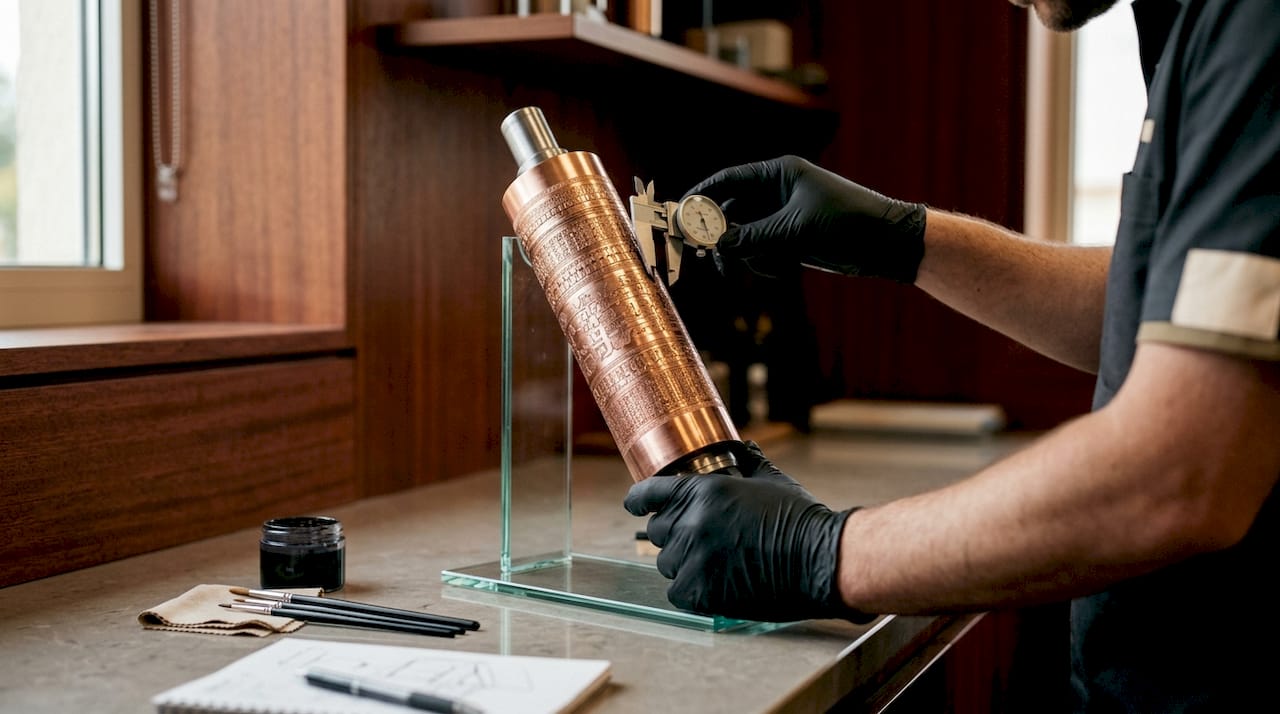
Indirect gravure (offset gravure) adds a rubber transfer roller between the cylinder and substrate, useful for irregular or hard surfaces like decorated metals and wood. Direct gravure remains the standard for flexible packaging and publication work.
What industries and products rely on gravure printing?
Flexible packaging dominates gravure’s current commercial footprint. Food pouches, beverage packaging, pet food bags, and seafood packaging all benefit from gravure’s ability to print on thin films at high speed with color that stays consistent from the first impression to the millionth.
Beyond flexible packaging, gravure serves a broad range of sectors:
- Labels and decorative materials: Wallpaper, vinyl flooring, and furniture laminates printed on rolls up to 12 feet wide
- Publication printing: Long-run magazines exceeding one million copies, mail-order catalogs, and Sunday newspaper ad inserts
- Security and specialty printing: Postage stamps, currency, and collectible fine art prints where tonal accuracy is non-negotiable
- Industrial converting: Laminates, coated papers, and specialty films for the converting industry
Substrate versatility is one of gravure’s practical strengths. Polyethylene, polypropylene, polyester, BOPP, nylon, and paper all run through gravure presses, typically as continuous webs rather than sheets. Film thicknesses commonly range from 10 to 30 micrometers. Geographically, Asia leads gravure adoption for packaging, while Europe maintains a strong presence. In the Americas, gravure use has stagnated in publications but remains active in packaging.
Advantages and disadvantages of rotogravure printing
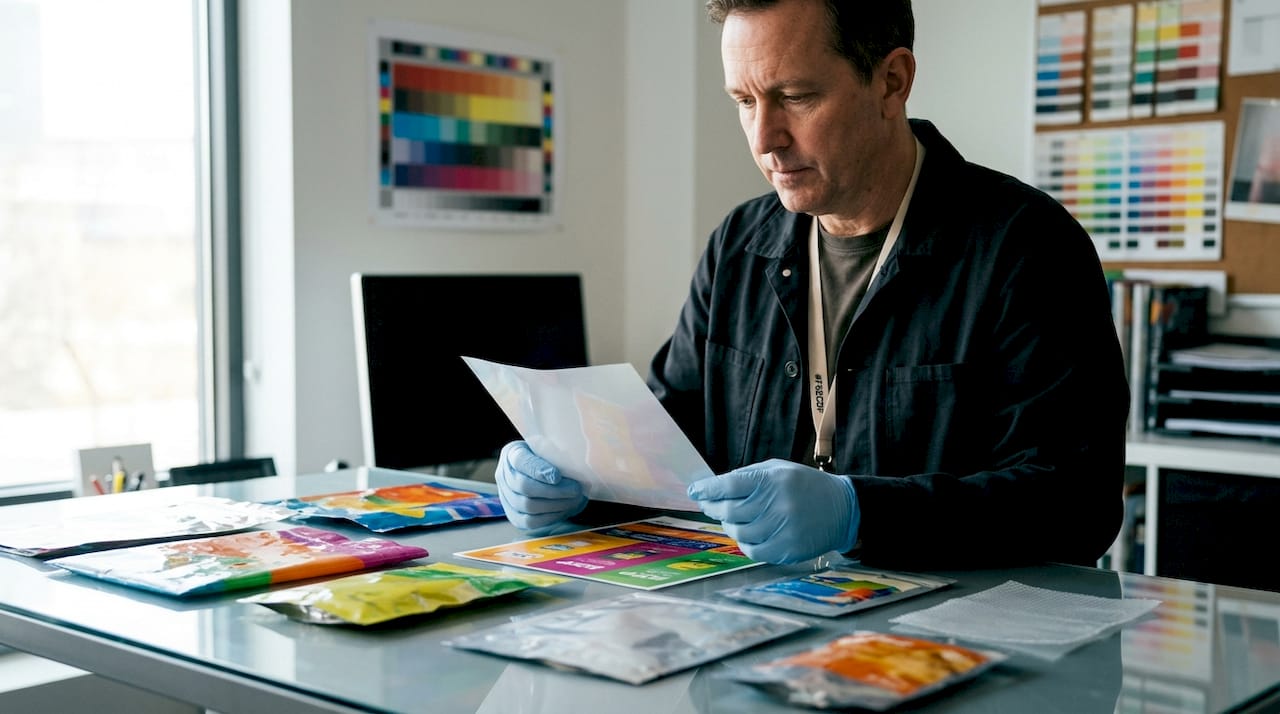
Gravure’s strengths are most visible at scale. Because the cylinder is a hard-tooling element that endures millions of impressions without image degradation, per-unit costs drop sharply as volume rises. Color consistency is a genuine operational advantage: ink does not smear, color variation is rare, and printed rolls can be handled and bundled immediately after printing.
The process also delivers a remarkable density range, from the lightest highlights to deep shadows, making it the preferred choice for fine art reproduction and photography-heavy packaging. That tonal depth comes from the cell-based ink system, where cell depth directly controls color intensity.
Pro Tip: The characteristic “sawtooth” edge on gravure-printed text and the visible dot screen pattern on solid areas are not defects. They are inherent to the cell-based image structure. Specifying adequate ink-substrate compatibility and cell geometry during prepress minimizes their visibility.
The limitations are real and primarily economic. High initial setup costs mean gravure only becomes cost-effective for very large production runs, typically over one million copies for publication work. Cylinder preparation is offsite and specialized, adding lead time. And the chrome plating process uses hexavalent chromium, which OSHA classifies as carcinogenic to workers, creating both regulatory and environmental compliance obligations.
| Factor | Advantage | Limitation |
|---|---|---|
| Print quality | Exceptional tonal range and color density | Dot screen visible on solids; sawtooth on type |
| Run economics | Low per-unit cost at high volume | High setup cost; unprofitable below large runs |
| Cylinder durability | Millions of impressions without degradation | Long lead time; offsite cylinder manufacturing |
| Substrate range | Thin films, paper, laminates, webs | Less flexible for irregular or hard surfaces |
| Environmental | Consistent, low-waste at scale | Hexavalent chromium in plating; solvent inks |
How does rotogravure compare to flexography and digital printing?
The three dominant processes in flexible packaging each occupy a distinct economic and technical position. Gravure is an intaglio process; flexography uses raised relief plates; digital printing uses no physical image carrier at all.
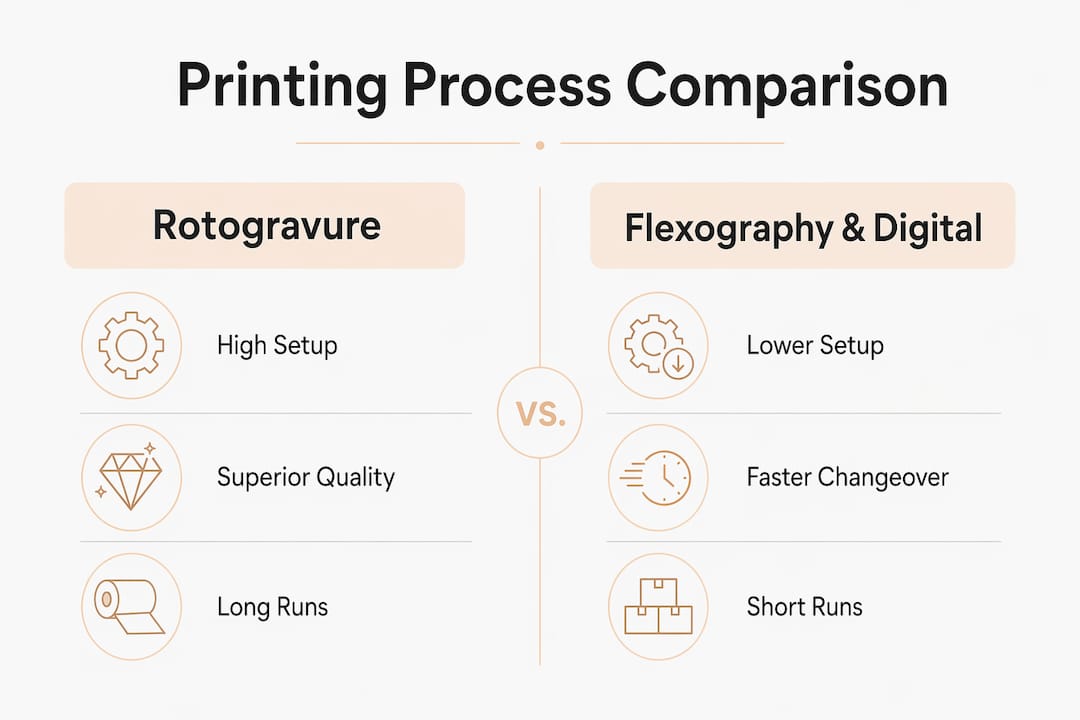
| Criteria | Rotogravure | Flexography | Digital printing |
|---|---|---|---|
| Setup cost | High (engraved cylinders) | Moderate (photopolymer plates) | Low (no plates or cylinders) |
| Ideal run length | Very high volume (1M+ copies) | Medium to high volume | Short runs and variable data |
| Image quality | Exceptional tonal depth | Good, improving with HD plates | High, limited by substrate |
| Substrate range | Films, paper, laminates | Broad, including corrugated | Primarily paper and select films |
| Turnaround | Longer (cylinder prep offsite) | Moderate | Fast |
| Color consistency | Extremely consistent | Consistent | Variable at high speed |
Digital printing handles short runs and customization far more economically than gravure, while gravure delivers color depth and consistency that digital cannot replicate at high volume. Flexography sits between the two: lower setup costs than gravure, broader substrate compatibility, and a strong position in medium-run packaging. For brands evaluating digital printing versus gravure, the decision usually comes down to order volume and how much color fidelity matters on shelf.
Notable examples and cultural impact of gravure printing
Rotogravure shaped how Americans consumed visual media for much of the 20th century. The World War I rotogravure supplements published by American newspapers documented the war effort, reproduced classic paintings, and captured everyday American life with a photographic quality that letterpress simply could not achieve on newsprint.
“Rotogravure printing is so consistent that color variations are rare, ink does not smear, and pages can be handled and bundled for shipping immediately. Newly equipped newspapers were able to print large pictorial sections that increased readership and advertising revenue.” — Library of Congress, The Rotogravure Process
Beyond newspapers, gravure left its mark on consumer culture through packaging. The Tootsie Roll wrapper, printed on a single-color gravure press starting in 1933, was one of the first mass-produced flexible packages in the United States. The Jell-O presses of 1938 pushed the technology further, printing multi-color cartons at speeds that defined industrial packaging for decades. Postage stamps and currency printing also adopted gravure for its tonal precision and resistance to counterfeiting. The cultural reach of rotogravure imagery in mass media was broad enough that the word “rotogravure” entered popular American vocabulary, immortalized in the Irving Berlin lyric “your picture in the rotogravure” from the 1954 musical There’s No Business Like Show Business.
Where rotogravure printing stands today and where it’s heading
Gravure’s present dominance in flexible packaging is clearest in Asia, where it holds an estimated 80% market share of the flexible packaging sector. Europe maintains a strong gravure presence, particularly for high-volume food and consumer goods packaging. In the Americas, publication gravure has largely given way to digital and offset, but packaging applications remain active.
The technology itself continues to evolve:
- Electronic line shafts replace mechanical drive systems, improving register accuracy and reducing mechanical complexity
- Registron® print register control and similar systems reduce waste during press startup and job changes
- Electrostatic assist improves ink transfer on thin films, reducing defects at high press speeds
- Cylinder engraving precision continues to advance, with laser engraving enabling finer cell geometries and tighter color control
Pro Tip: For brands considering gravure for coffee packaging or other premium food products, the cylinder’s long service life means the per-unit cost advantage grows with repeat orders. The upfront investment in cylinder preparation pays back across multiple production runs of the same design.
Sustainability is the most pressing challenge. Solvent-based gravure inks and hexavalent chromium in cylinder plating face increasing regulatory scrutiny. Water-based and UV-curable ink systems are gaining ground, and some cylinder manufacturers are exploring alternative plating chemistries. For food and beverage brands prioritizing sustainable packaging, the shift toward cleaner gravure chemistry is a meaningful development worth tracking. The balance between gravure’s unmatched consistency at scale and digital printing’s flexibility for shorter, variable runs will continue to define how packaging decisions get made across the industry.
Ready to put premium printing to work for your brand?
At Impacked, we work with food, beverage, pet food, and lifestyle brands to deliver custom printed packaging that performs on shelf and in production. Whether your project calls for the color depth of gravure or the flexibility of digital, we guide you through every decision from substrate selection to final delivery. Orders start at 500 units, with express production available in as little as two weeks.
Explore our flexible packaging solutions or get a custom quote to start building packaging that makes an impact.
Key Takeaways
Rotogravure printing delivers unmatched color consistency and tonal depth at high volume, making it the dominant process for flexible packaging in Asia and a strong choice for any brand printing at scale.
| Point | Details |
|---|---|
| Process fundamentals | Engraved cylinders transfer ink by capillary action; doctor blade and impression roller control coverage. |
| Economic threshold | Gravure becomes cost-effective for very large production runs, typically over one million copies. |
| Cylinder durability | Hard-tooling cylinders endure millions of impressions without image degradation, lowering per-unit cost over time. |
| Market dominance | Gravure holds an estimated 80% market share in flexible packaging in Asia and a strong European presence. |
| Sustainability pressure | Hexavalent chromium plating and solvent inks face growing regulatory scrutiny; water-based alternatives are advancing. |