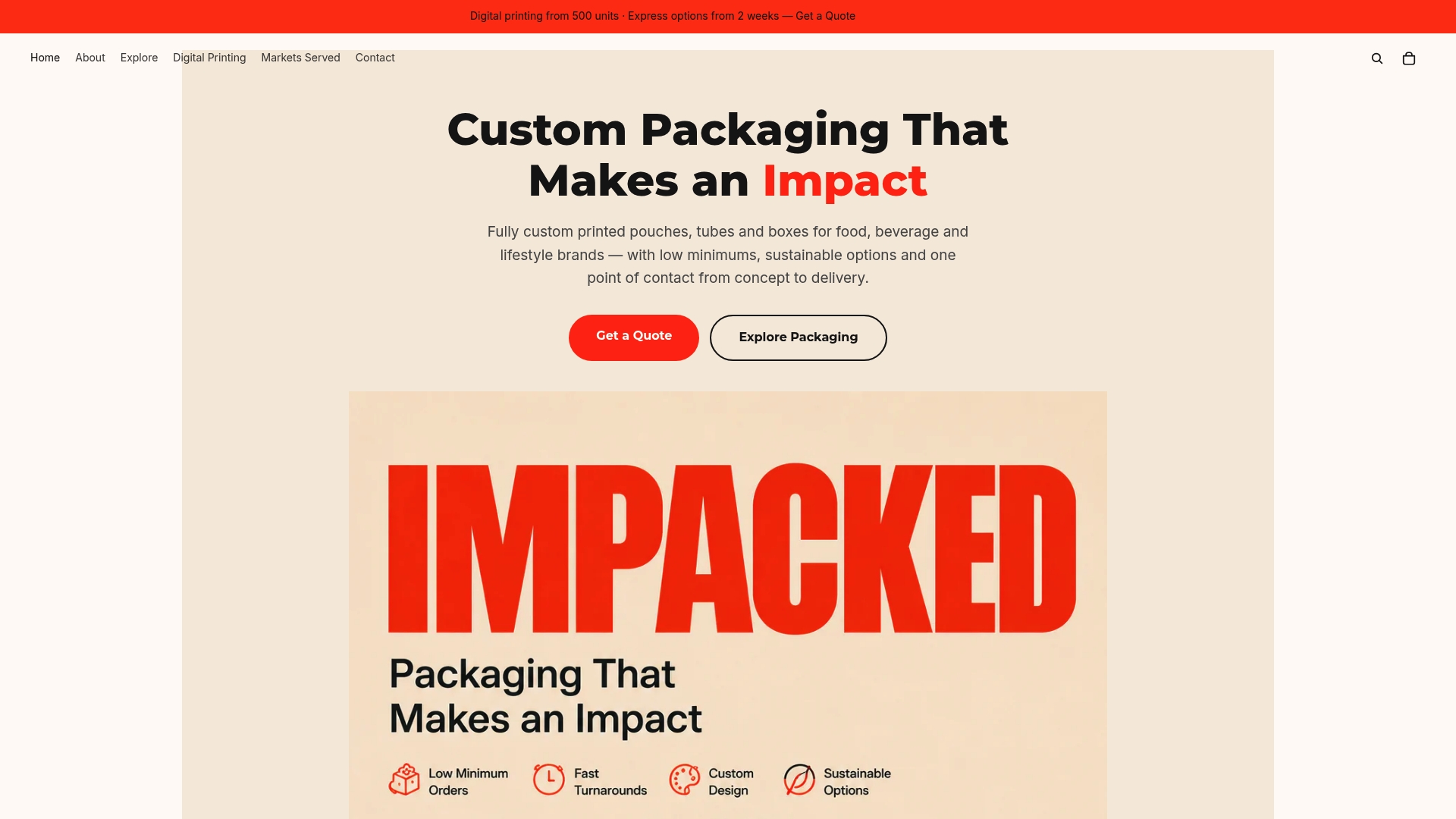
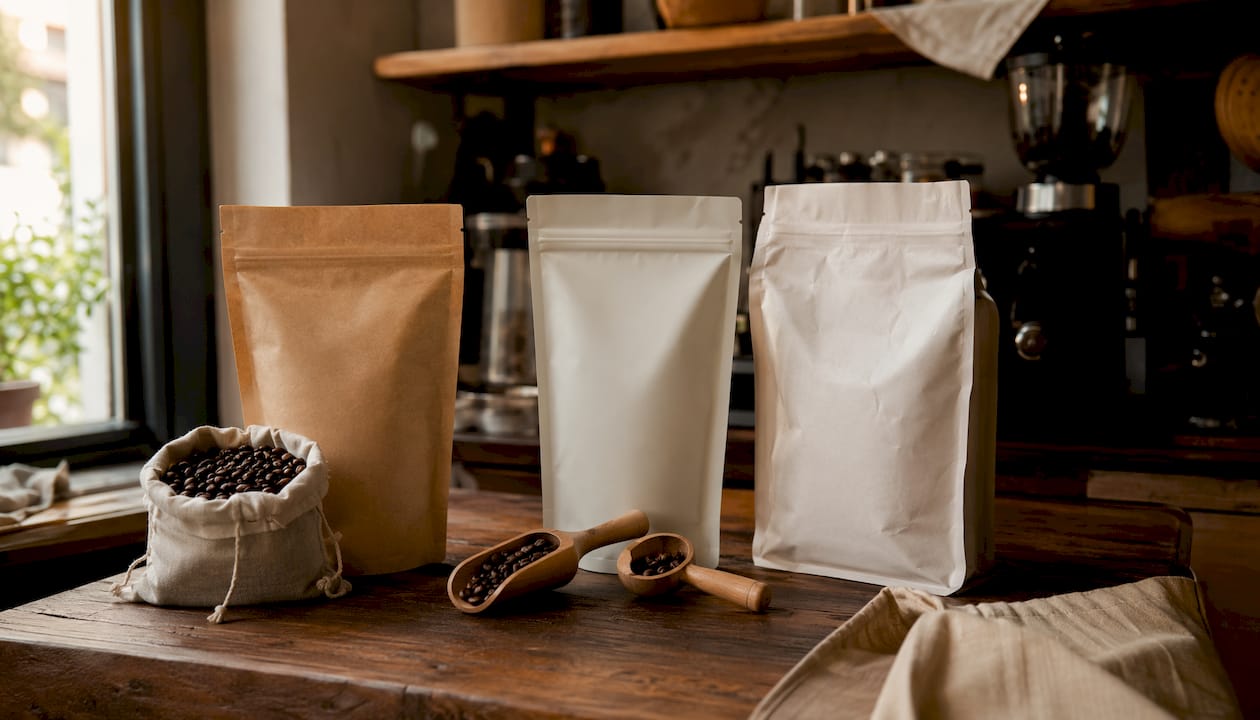
Eco friendly coffee bags are the right choice for coffee brands that want to protect freshness, reduce plastic waste, and back their sustainability values with real, certified packaging. The three main categories are compostable, biodegradable, and recyclable, each with distinct materials, certifications, and end-of-life paths. Getting the selection right means understanding what each type actually delivers, not just what the label says.
What makes eco friendly coffee bags worth the switch?
Sustainable coffee packaging does two jobs at once: it keeps your coffee fresh and reduces the environmental footprint of your brand. The core types break down like this:
- Compostable bags break down in composting environments, certified to standards like ASTM D6400 and EN 13432, and are made from materials such as kraft paper, PLA, PBAT, and PHA bioplastics.
- Biodegradable bags degrade naturally over time but may not meet the stricter timelines or conditions required for compostability certification.
- Recyclable bags use monomaterial films, typically mono-PE, that can enter standard recycling streams when certified to EN 13430.
All three types can include functional features like one-way degassing valves and resealable zippers, made from compostable or recyclable materials to match the bag’s end-of-life claim. Certifications from bodies like BPI (Biodegradable Products Institute) add a layer of verified trust for US brands and their customers.
Types and materials used in sustainable coffee packaging
The material you choose determines barrier performance, composting pathway, and how your bag looks on shelf.
- Kraft paper with PLA/PBAT laminate: The most common compostable structure. Kraft provides a natural aesthetic; PLA and PBAT inner layers deliver oxygen and moisture barriers. Compostable bags in this format typically carry BPI and OK Compost Industrial certifications.
- PHA bioplastic: Polyhydroxyalkanoates, produced through bacterial fermentation of plant-based oils, offer full compostability in marine, soil, home, and industrial environments. PHA bags are compatible with degassing valves and resealable zippers, and they leave zero microplastics after breakdown.
- Monomaterial PE: A fully recyclable option using a single-polymer polyethylene film. Certified to EN 13430 and Cyclos-HTP, mono-PE bags support standard recycling programs while still accommodating one-way valves and zip closures.
- PLA-only structures: Lighter weight and fully plant-based, though typically limited to industrial composting conditions.
Bag formats available across all these materials include stand-up pouches, flat-bottom bags, and gusseted bags for larger volumes. Each format works for different retail and wholesale needs.
How certifications verify your bag’s sustainability claims
Certification is the difference between a marketing claim and a verified fact. The two primary compostability standards are ASTM D6400 (the US standard) and EN 13432 (the European equivalent). Both define how quickly and completely a material must break down under industrial composting conditions. EN 13430 covers recyclability verification for materials like mono-PE.
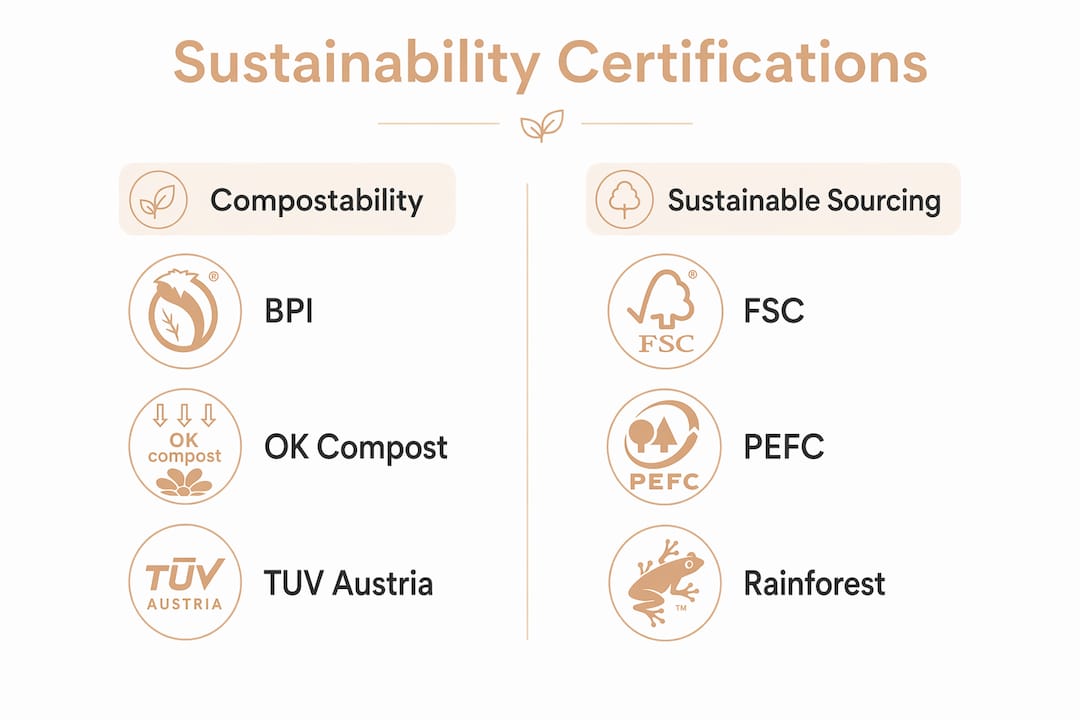
The critical detail most buyers miss: certification must cover every component individually, not just the film. That means the degassing valve, resealable zipper, adhesives, and sealant layers each need their own certification. A bag where only the outer film is certified compostable cannot be composted as a whole unit. Verify that the supplier’s documentation lists each component separately.
Pro Tip: Ask suppliers for component-level certification documents, not just a single product certificate. A full compostable bag should show certified status for the film, valve, zipper, and adhesive as separate line items.
BPI certification is the most recognized mark for US composting facilities. For brands targeting European markets or retailers with EU compliance requirements, EN 13432 and TÜV AUSTRIA’s OK Compost marks carry strong recognition.

Customization options that keep your brand front and center
Sustainable packaging does not mean generic packaging. Coffee brands can fully customize eco friendly bags across several dimensions:
- Print options: Rotogravure printing supports up to 10 colors with food-grade or soy-based inks. Digital printing is available for shorter runs, with gloss, matte, and spot UV finishes.
- Sizes: Standard formats are available in small to medium sizes and fully custom sizing is available to match your roast volumes.
- Functional components: Compostable PLA zippers and certified compostable one-way valves can be specified to maintain the bag’s full end-of-life claim.
- MOQ and lead times: Digital print runs start at modest quantities with lead times usually around two weeks. Gravure printing typically requires 10,000 units but delivers lower per-unit costs at scale.
Custom printing on sustainable substrates lets your brand tell its sustainability story directly on the shelf, without sacrificing visual quality.
Keeping coffee fresh inside a sustainable bag
Freshness and sustainability are not in conflict when the bag is engineered correctly. The key features to specify:
- One-way degassing valves: Freshly roasted coffee releases CO₂ for days after roasting. A one-way valve vents that gas without letting oxygen in, protecting aroma and flavor. Compostable valves made from PLA are available and certified for composting.
- Resealable zippers: After opening, a PLA or PE zipper closure extends shelf life by limiting oxygen exposure. Specify a zipper material that matches your bag’s certification.
- Barrier layers: Oxygen and moisture barriers in compostable laminates perform comparably to conventional multi-layer plastic films when properly specified. PHA and kraft/PLA structures both deliver strong barrier ratings.
- Equipment compatibility: Most sustainable flexible bags run on standard vertical form-fill-seal (VFFS) and horizontal packaging lines. Confirm heat-seal temperature ranges with your supplier before committing to a full run.
The barrier and gas-management features must be designed together. A bag with a great oxygen barrier but no degassing valve will balloon and potentially fail within days of packing fresh roasted coffee.
Disposal and composting: what your customers actually need to know
Compostability certification and real-world composting outcomes are not the same thing. ASTM D6400 and EN 13432 certifications apply to industrial composting conditions, typically 140–160°F with controlled moisture and microbial activity. Home compost systems run cooler and slower, so results vary and some certified bags may not fully break down at home within a reasonable timeframe.
- Industrial composting: the most reliable path for certified compostable bags; check local facility acceptance before making claims to customers.
- Home composting: possible with some PHA and kraft/PLA bags, but outcomes depend on pile conditions and local climate.
- Recycling: monomaterial PE bags certified to EN 13430 can enter store drop-off programs (like those accepting plastic film) where available.
Align your on-pack disposal instructions with the infrastructure your customers actually have access to. The FTC’s Green Guides require that environmental claims be truthful, not misleading, and backed by competent evidence.
How Impacked helps coffee brands get sustainable packaging right
Impacked works directly with coffee roasters and retailers to build custom, print-ready sustainable packaging from the ground up. Our coffee packaging options include compostable and recyclable materials, with full-color custom printing, compostable valve and zipper options, and order minimums starting at 500 units.
- Single point of contact from spec to delivery, so nothing falls through the cracks
- Digital and rotogravure printing with express production as fast as two weeks
- Recyclable and compostable material options with certification support
- Design and dieline assistance for brands building their packaging from scratch
We work closely with you to match the right material, format, and certification to your brand’s sustainability goals and your customers’ disposal options. Brands across the US coffee market, along with eco-focused businesses in growing regional markets, are making this shift now.
Comparing the environmental impact of different materials
Not all sustainable materials carry the same environmental footprint across their full lifecycle.
| Material | End-of-life pathway | Key environmental trade-off |
|---|---|---|
| Kraft paper / PLA / PBAT | Industrial composting | PLA requires industrial heat to break down fully |
| PHA bioplastic | Marine, soil, home, industrial composting | Higher production cost; broadest composting compatibility |
| Monomaterial PE | Recycling (film drop-off programs) | Petroleum-based but recyclable; avoids landfill when collected |
| Multi-layer conventional film | Landfill only | Cannot be recycled; persists for centuries |
PHA offers the widest end-of-life flexibility because it degrades in environments where conventional and even other compostable plastics do not. Kraft/PLA structures score well on renewable content but depend on industrial composting access. Mono-PE is the strongest choice where recycling infrastructure is reliable and composting is not.
Cost considerations for eco friendly coffee bag options
Sustainable bags cost more per unit than conventional multi-layer film, and the gap varies by material and order volume.
Kraft/PLA compostable bags are the most widely available and tend to carry the lowest premium over conventional packaging. PHA bags command a higher price due to the complexity of bioplastic production, but that cost has been falling as the material scales. Monomaterial PE bags sit in the middle, often close to conventional pricing at higher volumes because the mono-film structure simplifies manufacturing.
Digital printing at 500-unit MOQs lets smaller roasters test sustainable packaging without overcommitting. Gravure printing typically requires a minimum order of 10,000 units but provides lower per-unit cost at scale. Factor in the brand value of certified sustainable packaging when calculating ROI: retailers and specialty coffee buyers increasingly require sustainability documentation from their suppliers.
Shelf life and durability across eco friendly bag types
Barrier performance is the primary driver of shelf life in any coffee bag, sustainable or not.
Well-specified kraft/PLA and PHA bags deliver oxygen and moisture barrier ratings comparable to conventional multi-layer films, supporting typical roasted coffee shelf life when sealed and stored correctly. Monomaterial PE bags with proper barrier coatings perform similarly. The weakest link is usually the valve or zipper seal, which is why component-level certification and quality control matter as much as the film itself.
Durability in transit is another consideration. Kraft-based bags can be more susceptible to moisture damage in humid shipping environments than PE-based options. PHA bags tend to be more resilient across temperature and humidity ranges, which suits direct-to-consumer shipping as well as retail distribution.
Brands that have made the move to sustainable coffee packaging
Driftaway Coffee is one of the clearest examples of a specialty roaster committing fully to certified compostable packaging. Their bags use a three-layer structure of paper, PLA50, and PLA25, with every component, including the valve, seal, and adhesive, certified ASTM 6400 for municipal and industrial composting. The bags are also PFAS-free, which addresses a growing concern in food-contact materials.
The broader trend is clear: specialty and direct-to-consumer roasters are leading adoption because their customers actively seek out brands that match their values. Retailers sourcing from these roasters are beginning to require sustainability documentation as a baseline, not a differentiator. Brands that establish certified sustainable packaging now are better positioned as those requirements tighten.
Regulatory and labeling requirements for sustainable coffee packaging
US brands face two primary regulatory frameworks when making environmental claims on coffee packaging.
The FTC Green Guides set the standard for what constitutes a truthful environmental claim. “Compostable” claims must be qualified if the product cannot be composted in a facility available to a substantial majority of consumers. “Biodegradable” claims require that the entire product breaks down within a reasonably short time after disposal. Vague terms like “eco-friendly” or “green” without substantiation are flagged as potentially deceptive.
FSC certification from the Forest Stewardship Council applies to paper-based components and verifies responsible sourcing of the kraft layer in compostable bags. BPI certification from the Biodegradable Products Institute is the most recognized US mark for compostable packaging and is required by many municipal composting programs before they will accept a product. Brands selling into California face additional scrutiny under SB 343, which restricts the use of the chasing-arrows recycling symbol on packaging that is not accepted in a majority of California’s recycling programs.
Label your bags with the specific certification marks you have earned, the correct disposal instructions for your certified pathway, and any required qualifications. Accurate labeling protects your brand and builds the customer trust that vague green claims erode.
Key Takeaways
Compostable, recyclable, and biodegradable coffee bags each require specific certifications, matched components, and aligned disposal infrastructure to deliver on their sustainability claims.
| Point | Details |
|---|---|
| Certify every component | Valves, zippers, and adhesives each need individual certification, not just the outer film. |
| Match material to disposal infrastructure | PHA works in home and marine composting; kraft/PLA requires industrial facilities; mono-PE needs film recycling drop-off. |
| MOQs start at 500 units | Digital print runs allow small roasters to test sustainable packaging without large upfront commitments. Gravure printing typically requires a 10,000 unit minimum, which lowers per-unit costs at higher volumes. |
| FTC Green Guides govern claims | Compostable and biodegradable claims must be qualified and substantiated to avoid regulatory risk. |
| Barrier and valve design work together | A strong oxygen barrier without a degassing valve will cause bag failure within days of packing fresh roasted coffee. |
Ready to build packaging that reflects what your brand actually stands for? Impacked works with coffee roasters and retailers to deliver fully custom, certified sustainable bags with low minimums and fast turnaround. Explore coffee packaging options or get a custom quote to start the conversation.